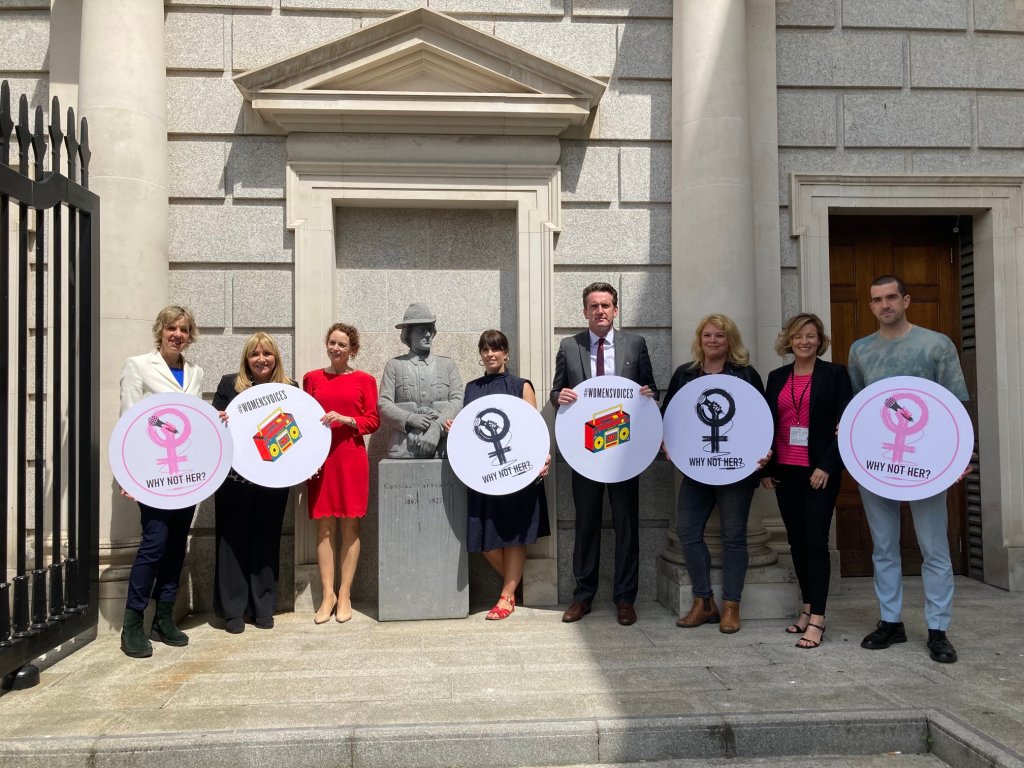
Over the last few years, conversations about equity in music criticism have shifted from fringe to front page. One organisation doing this work not with flash but with depth is Why Not Her? — a platform committed to amplifying women in music, challenging industry bias, and reshaping what cultural discourse looks like. Their mission isn’t glossy branding; it’s structural interrogation.
In an industry still dominated by male voices, both in critical spaces and executive rooms, Why Not Her? refuses the passive “inclusion checklist” mentality. Instead, it pushes for sustained systemic shifts: equitable representation, scrutiny of power networks, and real support for women’s creative labour. While mainstream coverage may briefly notice gender gaps during Women’s History Month or the Grammys, Why Not Her? makes this an everyday priority — a stance that echoes louder than press releases ever could.
This matters because representation is not simply a numbers game. It determines whose narratives are heard, whose cultural contributions are acknowledged, and whose work is archived versus ignored. As festivals expand and streaming platforms algorithmically push certain artists forward, the voices that shape cultural memory are just as important as the artists themselves.
Platforms like Why Not Her? are crucial precisely because they operate at the intersection of culture and critique — where celebration meets accountability. They remind us that art doesn’t exist in a vacuum. The conversations around it — who gets to write them, who gets quoted, who gets featured — are part of the culture we consume.
If The Industry Review is committed to asking better questions about art, power, and influence, then recognising and engaging with movements like Why Not Her? isn’t optional — it’s essential. Because the future of cultural criticism is not just broader; it’s more honest, more reflective, and more inclusive.

 The Industry Review
Leave a comment