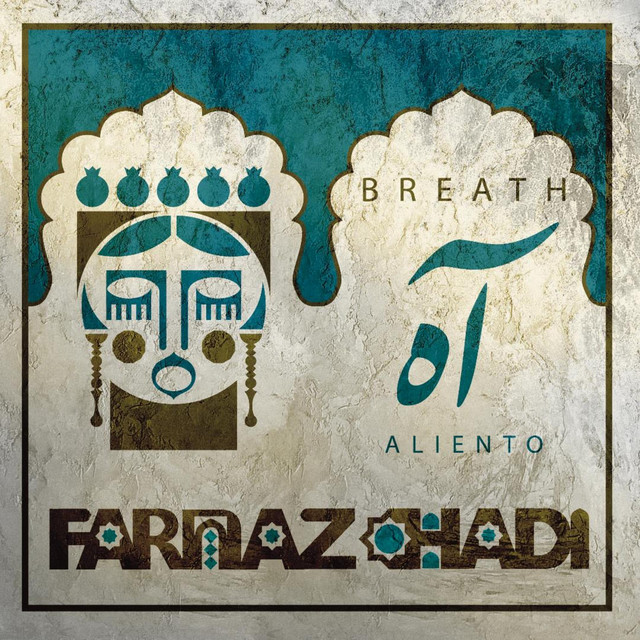
Our Rating: 10/10
There are albums that are technically good. There are albums that are culturally interesting.
Then there are albums that feel necessary.
Breath is necessary.
Farnaz does something here that most artists spend a lifetime circling but never quite land. She does not “blend genres” in a superficial, festival brochure way. She inhabits them. Persian melodic phrasing meets flamenco compás and neither feels like a guest. It feels like bloodline. Like muscle memory. Like something ancient remembering itself in a new body.
Her voice is the centre of gravity. Controlled without being cold. Powerful without theatrics. There is tensile strength in it, a sense that every note has travelled somewhere difficult before arriving in the room. That matters, especially when you understand the history of women’s voices being restricted, regulated, silenced. Singing in Farsi within a flamenco structure is not decorative. It is defiant and tender at the same time.
What makes Breath land is restraint. She does not overproduce emotion. She allows space. Silence is used intelligently. The arrangements breathe, as the title promises. You can hear Andalusian heat and Persian longing in the same phrase. That is not easy. That is craft.
There are moments on the record that feel almost devotional. Not religious in a narrow sense, but spiritual in the way real art can be when it is rooted in identity rather than market positioning. You sense migration, exile, survival, joy and a refusal to shrink.
This album does not ask permission. It does not dilute itself to be more accessible. It trusts the listener. That trust is rare.
As a body of work, Breath is a statement about belonging to more than one place and refusing to amputate parts of yourself to make others comfortable. In a world obsessed with flattening culture into playlists, Farnaz offers depth.
What gives the album its gravitas is the historical undercurrent running through it. Flamenco did not emerge from comfort. It came from communities pushed to the margins, shaped by migration, persecution and survival. Persian classical music carries its own centuries of poetic resistance and modal complexity. When Farnaz brings these traditions together, she is not creating a trendy cross cultural moment. She is reconnecting musical languages that have shared echoes since Al Andalus. You can hear that lineage in the melismatic phrasing, in the tension between stillness and eruption, in passages that feel suspended in time. It feels researched, yes. But more importantly, it feels lived.
The production deserves attention too. The arrangements never crowd her voice. Guitar lines are deliberate. Percussive accents are measured. Space becomes an instrument in its own right. That restraint allows the themes to land without melodrama. Exile, womanhood, autonomy, grief and pride are present, but they are not shouted. They are carried. In an industry obsessed with spectacle, Farnaz chose depth. In a climate where women’s anger is often sensationalised or dismissed, she offers something steadier and more dangerous. Control. Breath held. Breath released. That quiet command lingers long after the record ends.
You cannot separate this album from her activism. It is threaded through it.
Farnaz is not an artist who discovered politics for marketing value. Her very act of performing as a woman, singing in Farsi, standing centre stage in flamenco spaces, is political whether she announces it or not. The context of Iranian women fighting for autonomy over their bodies and voices is not background noise. It is oxygen. When women chant for freedom, when the world watches protests unfold, the idea of breath shifts. It becomes survival. It becomes refusal. It becomes testimony.
What is powerful is that her activism does not arrive as slogans. It arrives as embodiment. She does not dilute the message to make it palatable. She honours women whose stories are uncomfortable. She platforms complexity rather than flattening it. Many artists gesture toward solidarity. Farnaz lives it through cultural risk, through language choice, through refusing to separate art from identity.
Critics have described Breath as healing and introspective. It is. But it is also quietly confrontational. It asks audiences to confront the uneven distribution of freedom. It asks flamenco purists to consider whose stories are allowed inside the tradition. It asks Western listeners to examine how easily we consume “world music” without acknowledging the political conditions that shape it.
Her activism is not an add on. It is structural. It lives in the repertoire, in the collaborators, in the public voice she uses consistently and without apology.
That is courage.
And courage has a sound.
This is what it sounds like when heritage and defiance share a microphone.
Art like this does not just entertain. It insists.

 theindustryreview.com
Leave a comment