Our Rating 7/10
This is not a film interested in speed. The Testament of Ann Lee moves with intention, almost austerity. It resists spectacle. It resists easy moral framing. Instead, it lingers in the uneasy space between faith and power.
The story centres on Ann Lee, founder of the Shaker movement, a woman who claimed divine revelation in a world that barely tolerated women speaking in public, never mind leading spiritually. The film understands the volatility of that position. It does not rush to label her saint or zealot. It allows contradiction to exist.
At the centre of that contradiction is Amanda Seyfried.
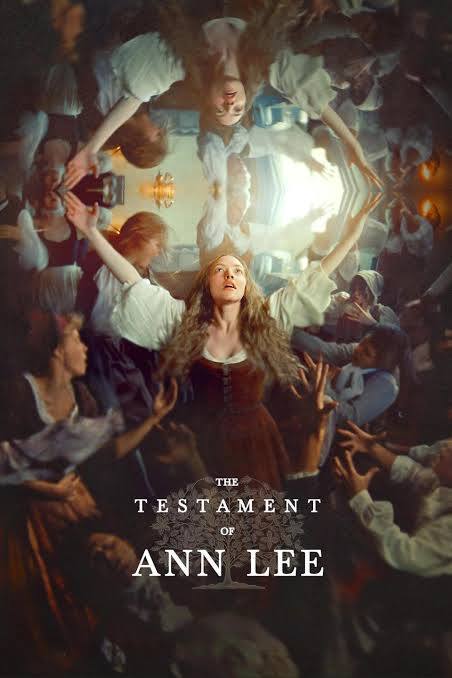
Her performance is restrained to the point of severity. She does not lean into melodrama. She does not telegraph emotion for audience approval. Instead, she internalises. Her Ann Lee speaks with measured conviction, often in near stillness, and that stillness becomes commanding rather than passive. There is a precision in her physicality. The way she holds eye contact. The way she lowers her voice rather than raising it. It feels controlled, deliberate, dangerous.
Seyfried avoids caricature. She does not play Ann as hysterical visionary nor fragile mystic. She plays her as intelligent and strategic. There is steel beneath the devotion. You see calculation in moments where others see submission. That nuance is the performance’s greatest strength.
Where the film succeeds most is in its examination of female authority. The feminist undercurrent is not shouted. It is embedded. The tension between a woman claiming direct communion with God and a patriarchal society scrambling to contain her feels uncomfortably contemporary. The film quietly asks who gets to define sanity, who gets to define leadership, and who benefits from labelling powerful women as unstable.
The pacing will test some viewers.
There are long stretches where dialogue is sparse and silence dominates. Reflection replaces momentum. At times, the film risks drifting into abstraction. But that stillness feels intentional. It mirrors the isolation of a woman carrying belief that few around her fully understand.
If there is a weakness, it lies in the narrative structure. The film occasionally circles its themes without deepening them, as though hesitant to commit fully to either psychological portrait or historical drama. It hovers between modes.
Yet even in those quieter lulls, Seyfried anchors the frame. Her presence holds the film together. She carries the tension in her posture, in the flicker of doubt across her face, in the restraint of her speech.
This is not crowd pleasing cinema. It is contemplative, layered and at times austere.
But it is also a thoughtful exploration of faith, control and the cost of a woman refusing to shrink inside systems built to silence her.
Measured, reflective and quietly confrontational.

 The Industry Review
Leave a comment