Every year the industry declares a new wave. Most of it is noise. Real movement is quieter at first. It shows up in sold-out mid-size rooms, in longlists before the headlines, and in artists tightening their live sets while the wider market is still distracted.
The ten names below are not algorithm accidents or overnight curiosities. They are building infrastructure, audience, and identity in ways that suggest durability rather than flash. Across Ireland and the UK we are seeing sharper songwriting, stronger genre cross-pollination and a generation less interested in fitting formats than in bending them. If 2026 belongs to anyone, it will belong to artists who can convert momentum into legacy.
🇮🇪 IRELAND
Curtisy
Curtisy represents a maturing phase in Irish hip-hop. Emerging from Tallaght’s DIY ecosystem during lockdown, he translated online traction into critical credibility with his mixtape and later full-length work, including What Was The Question, which charted strongly and earned Choice Prize attention. His strength lies in restraint. He writes with conversational intimacy rather than performative aggression, making vulnerability feel deliberate rather than accidental.
What makes 2026 interesting for Curtisy is scale. He has proven he can build community and critical respect. The next phase is infrastructure: larger stages, international collaborations, and whether his distinctly Irish storytelling can translate without dilution. If it does, he becomes part of the long-term story of Irish rap rather than a moment within it.
Soda Blonde
Soda Blonde have quietly become one of Ireland’s most sophisticated alternative exports. Rising from the ashes of Little Green Cars, the band reshaped themselves into something moodier, more textural and more politically alert. Their 2025 album People Pleaser demonstrated both sonic ambition and thematic clarity, exploring identity, disillusionment and modern womanhood with confidence.
In 2026 the question is expansion. They already command loyalty at home. The challenge now is penetrating wider UK and European circuits without losing the atmospheric density that defines them. Their evolution suggests longevity rather than trend chasing, which is precisely what serious alternative audiences respond to.
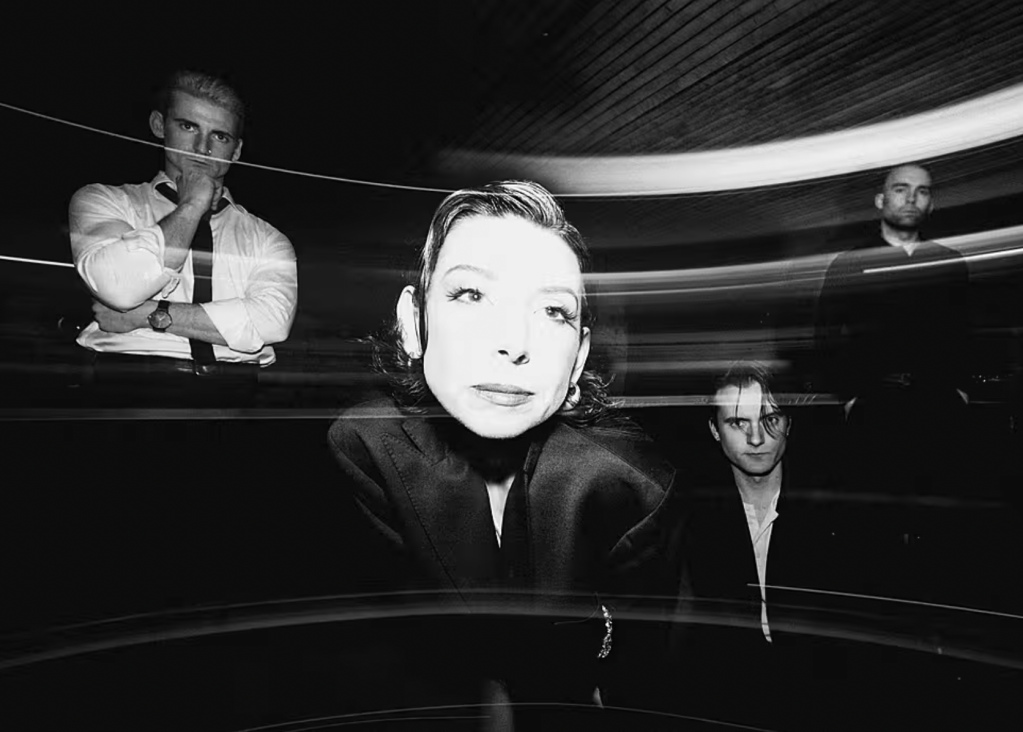
Photo credit used as the image of this article is also by Adam O’Regan.
Florence Road
Florence Road sit at the intersection of youthful indie revivalism and contemporary pop structure. Signed to Warner Chappell and tipped by BBC longlists, they have managed something rare: maintaining grassroots credibility while building major-label infrastructure around them. Their sound is melodic, guitar-forward and emotionally direct without feeling nostalgic.
The band’s trajectory hinges on live development. Supporting larger tours has given them exposure beyond Ireland, and 2026 will reveal whether they can convert that into headline territory. They feel built for festivals, and if the songwriting continues to sharpen, they could become one of Ireland’s defining indie exports of this cycle.
EFÉ
EFÉ’s rise began in the algorithmic world, with TikTok virality pushing her introspective alt-pop into broader visibility. But reducing her to a platform success misses the point. Her songwriting carries a quiet emotional intelligence, built on minimal production and honest phrasing rather than maximal hooks.
What will define her 2026 is artistic direction. Viral moments create opportunity but also pressure. If she deepens her sonic palette while retaining that diaristic core, she could transition from online breakthrough to respected long-form artist. The appetite for intimate, female-led alternative pop remains strong. The execution now matters.
Jordan Adetunji
Jordan Adetunji operates in a different lane entirely. With global streaming traction and major-label alignment, he represents Ireland’s increasingly genre-fluid future. His breakout track “Kehlani” signalled both commercial instinct and stylistic flexibility, blending alternative hip-hop with melodic sensitivity.
The key for 2026 is consolidation. Viral crossover success is one thing. Sustained artistic identity is another. If he balances mainstream reach with creative coherence, he positions himself not merely as a Northern Irish export but as part of a broader UK and international rap conversation.
🇬🇧 UNITED KINGDOM
Jacob Alon
Jacob Alon brings a literary sensibility to contemporary indie-folk. As a non-binary artist, their presence is culturally significant, but it is the songwriting that has earned Mercury and Critics’ Choice attention. Sparse arrangements allow the voice to carry emotional complexity without theatrical excess.
Their momentum suggests 2026 will be a consolidation year rather than a breakthrough gamble. With institutional recognition already secured, the next step is audience expansion beyond tastemaker circles. If the live translation matches the recorded intimacy, Jacob Alon could become a defining voice of this introspective era.
Elmiene
Elmiene stands within the lineage of British soul revival, yet avoids imitation. His Sudanese-British identity informs a vocal delivery steeped in gospel and R&B tradition, but the production feels contemporary and spatial rather than retro. BBC endorsements have positioned him as one of the UK’s most compelling emerging male vocalists.
In 2026 the test will be catalogue depth. The appetite for rich, textured R&B is undeniable, but longevity requires narrative and album-level cohesion. If Elmiene delivers a project that matches his vocal promise, he could bridge underground credibility and commercial recognition.
Master Peace
Master Peace injects irreverence back into UK rap. His work carries humour, abrasion and a sense of unpredictability that cuts through a sometimes overly polished scene. Sonically he leans into indie-rap hybridity, occupying a space between mosh pit energy and sharp lyrical instinct.
2026 feels pivotal. His live presence is gaining attention, and festivals will determine whether his chaotic charisma scales or remains cult. The UK scene benefits from voices that disrupt format, and Master Peace appears ready to test how far that disruption can travel.
Ellur
Ellur offers a more restrained proposition. Her songwriting leans into emotional nuance, pairing indie-pop sensibility with introspective lyricism. There is a cinematic quality to her arrangements that suggests long-term craft rather than short-term virality.
As audiences increasingly seek sincerity over spectacle, Ellur’s approach may prove well-timed. The challenge will be visibility. The quality is evident. The question is whether 2026 provides the platform scale required to move her from critical appreciation into wider recognition.
Ruti
Ruti’s vocal ability has never been in question. Since winning a national television platform early in her career, she has quietly developed a more nuanced soul-pop identity that prioritises artistic control over quick commercial wins. Her tone carries both warmth and grit, an increasingly rare balance.
The coming year presents an opportunity to redefine her narrative. Artists who survive early exposure often emerge sharper, more self-aware and more autonomous. If Ruti anchors her next project in cohesive storytelling, 2026 could reposition her from former breakout star to sustained cultural voice.

 The Industry Review
Leave a comment