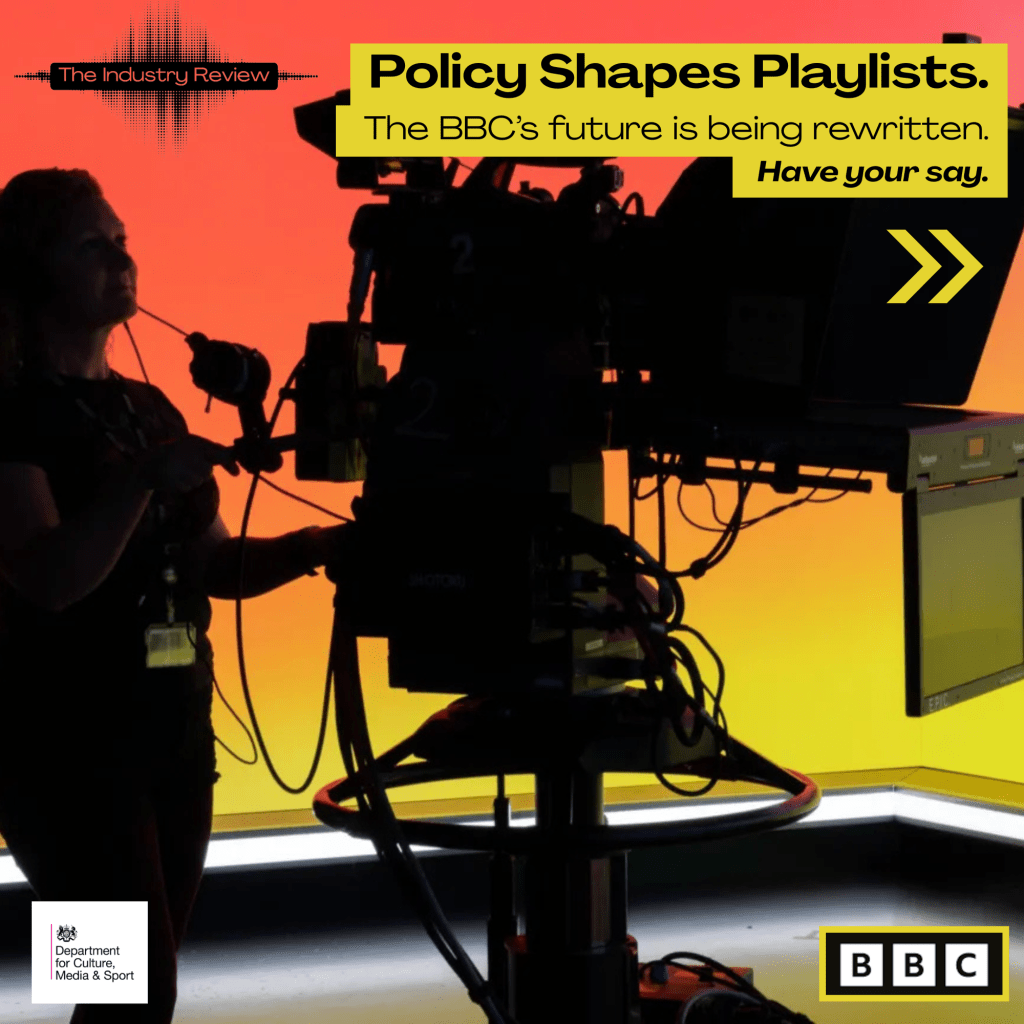
The UK government has formally launched the review of the BBC’s Royal Charter, the constitutional framework that sets the broadcaster’s mission, governance, public purposes and funding model. The current Charter expires at the end of 2027. The next Charter will define the BBC’s direction from January 2028 onwards.
This is not routine administration but a rather important structural redesign that we – those of us who work in the media and music industries especially – need to take interest in.
The first phase is a Green Paper consultation, inviting submissions from the public and industry stakeholders. The questions cover workplace standards, independence, funding models, economic impact, digital distribution and the BBC’s wider public purpose.
For the music sector, this review is consequential.
The BBC is the UK’s largest employer of musicians and one of the most significant commissioners of cultural content. Programmes such as BBC Introducing, BBC Young Musician and BBC Young Composer function as national development pipelines. According to PPL and PRS for Music data, BBC radio networks play more unique recordings and compositions than commercial equivalents. That breadth of repertoire directly supports careers, diversity and regional ecosystems.
Funding structures shape commissioning. Commissioning shapes visibility. Visibility shapes sustainability.
Through my own work in broadcasting and cultural policy, including leading evidence-based research into gender equity in UK and Irish radio and festival programming via my company Why Not Her?, I have seen first-hand how consultation processes influence long-term structural decisions. Civil servants and policymakers do read submissions. They look for patterns. They log evidence. They cite it.
If the music community does not engage, that absence becomes part of the record.
This consultation is open until 10 March 2026.
You do not need to answer every question. You do need to put your perspective on file. You just need to participate and answer the questions that matter to you. UK Music has helpfully mapped out some pointers here.
Submit your response to the consultation here:
https://dcms.eu.qualtrics.com/jfe/form/SV_9EOcvcDvkNu8c9E
Key Questions Music Stakeholders Should Consider
If you work in music, commissioning, publishing, management, live, education or production, these are the questions worth reflecting on before you submit:
• How central should music remain within the BBC’s public purposes?
• Should emerging talent pipelines like BBC Introducing and Young Musician be protected in the next Charter?
• How might changes to funding models impact music budgets and commissioning risk?
• What obligations should the BBC have around regional representation and genre diversity?
• How transparent should the BBC be about playlisting, commissioning and development pathways?
• Does the current structure adequately support independent and grassroots artists?
• How should the BBC balance commercial pressures with cultural responsibility?
You do not need to answer every question in the consultation. But you should answer the ones that affect your sector directly.
Because if the music community does not articulate what it needs, policymakers will assume silence equals consent.
Policy is not abstract. It determines who is funded, who is commissioned, who is platformed and whose work is deemed culturally valuable.
Charters last ten years.
Ten years in music can mean the difference between a generation emerging or disappearing.
Engage now, or accept the outcome later.

 The Industry Review
Leave a comment