In recent years, few cultural initiatives have reshaped Ireland’s conversation around identity and belonging as clearly as Black and Irish.
What began as three simple words shared online quickly grew into something much larger. At a time when conversations about race and representation were intensifying across the world, the phrase captured an experience many people in Ireland had long lived but rarely seen reflected in the national story. Direct and disarmingly simple, it resonated almost immediately.
Since then, Black and Irish has evolved into a significant cultural platform exploring identity, representation and community in modern Ireland. Through storytelling, public advocacy, partnerships and cultural initiatives, the organisation has helped widen the lens through which Irish identity is understood both at home and abroad.
Today, the work reaches far beyond the moment that first sparked it. It continues to develop projects that strengthen community networks while creating pathways for greater representation across Ireland’s cultural and creative industries.
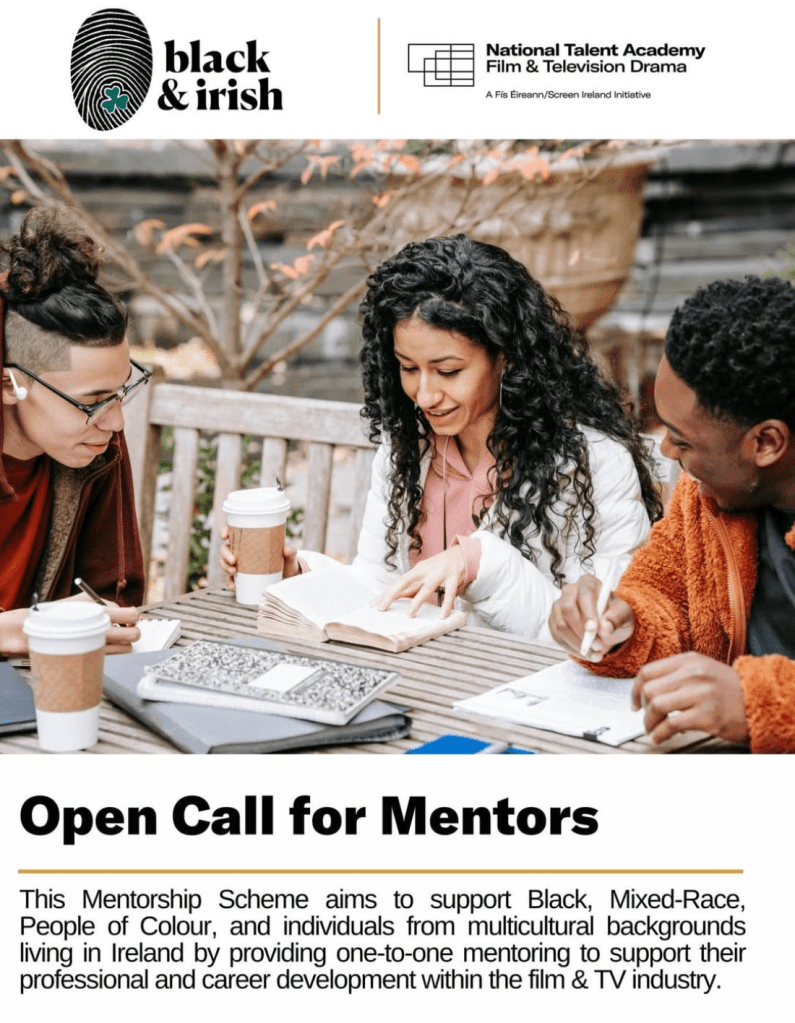
One example is a mentorship collaboration with the National Talent Academy for Film and TV Drama, an initiative supporting Black, mixed-race and multicultural creatives working within Ireland’s screen sector. The programme invites mentors from across film, television and the wider creative industries to support the next generation of talent and help open doors that have historically been harder to access. Full details and application form via nationaltalentacademies.ie/film-tv.
It reflects the wider mission of the organisation today. Not only to increase visibility, but to help shape the structures that determine who gets to participate in Irish cultural life.
Black & Irish: Stories That Expand the National Narrative
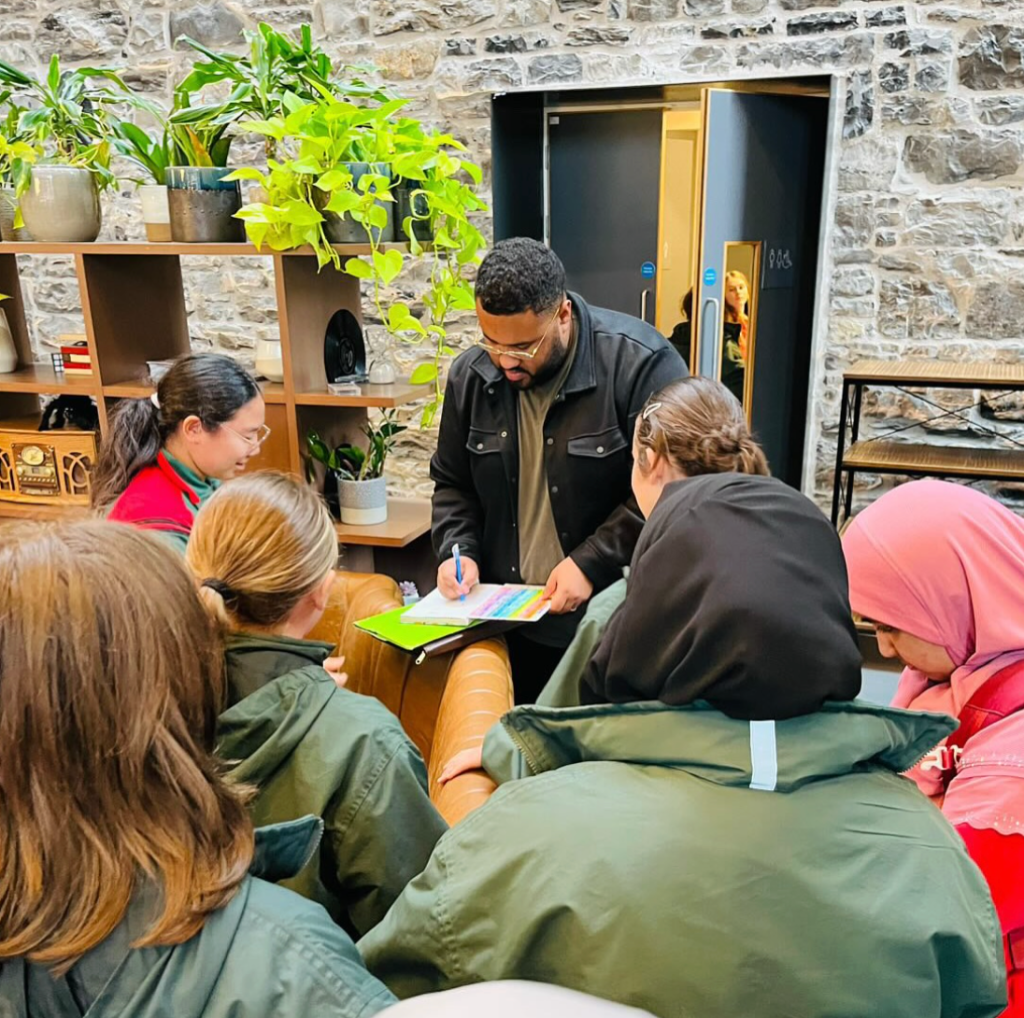
Alongside the community work and cultural advocacy that has grown around the organisation, the ideas behind Black and Irish have also extended into publishing, documenting the experiences and contributions of Black people across Irish society.
One of the most visible examples is the book Black & Irish: Legends, Trailblazers & Everyday Heroes, co-authored by Leon Diop and Briana Fitzsimons and published by Irish independent publisher Little Island Books. The book brings together a powerful collection of stories celebrating Black individuals who have shaped Ireland’s cultural, sporting and social landscape, while also recognising the everyday lives and experiences that form the fabric of modern Irish identity.
Rather than focusing only on well known figures, the book deliberately widens the lens. It highlights a spectrum of voices and experiences across generations, professions and communities, reinforcing the core idea that Irish identity is not singular but layered and evolving.
The project reflects the same ethos that sits at the heart of the wider Black and Irish movement. Representation matters not only in moments of visibility, but in the stories that are documented and passed forward.
Alongside this work, Diop is also the author of the memoir Mixed Up: An Irish Boy’s Journey to Belonging, also published by Little Island Books. In the book, Diop reflects on his childhood growing up in Ireland as the son of an Irish mother and a Senegalese father, navigating questions of identity, belonging and racism long before the national conversation around diversity had begun to shift.
Part coming-of-age story and part reflection on modern Irish identity, the book traces his journey from feeling like an outsider as a young boy to eventually founding the Black and Irish movement and helping others tell their own stories.
For this feature, Leon Diop, co-founder and CEO of Black and Irish, shared his reflections with The Industry Review on how the project first began, why the phrase resonated so deeply, and how the work has evolved from a moment of recognition into a long-term movement for cultural and structural change.
Below, he reflects on identity, belonging and the future of Ireland’s evolving cultural landscape.
Interview: Leon Diop, Black and Irish
Black and Irish began as a simple phrase that resonated with thousands of people almost overnight. Why do you think it struck such a deep chord?
I think it struck a chord because it was honest and it was simple. There was no academic language. No gatekeeping. Just three words that many of us had been carrying privately for years. It also came at a time when the Black experience and anti-Black racism were in the spotlight so I think it captured the moment here in Ireland.
It brought the Black Lives Matter movement here and gave it the necessary Irish spin. For so long people were told, directly or indirectly, that being Black and being Irish were somehow mutually exclusive. That you had to choose. When we put those words side by side, it felt like permission.
It told people you do not have to limit yourself to fit someone else’s imagination of this country. You belong as you are. It resonated because it named something that was already true.
Black and Irish has since grown into an important cultural movement in Ireland. How would you describe its purpose today compared to when you first started it?
At the beginning, it was about visibility. It was about saying “we are here”. Today it is about power, infrastructure and long-term change. Visibility is important, but visibility alone does not protect you from discrimination. It does not build pathways into leadership. It does not change systems.
Now the work is about improving the quality of life for Black and mixed-race people in Ireland. It is about policy, partnerships, cultural influence and making sure inclusion is the standard. The heart is the same, but the scale and sense of responsibility have grown.
The project began as a way of sharing stories and identities that had often been overlooked. What did you feel was missing from the national conversation at the time?
What was missing was nuance. And honesty. Brene Brown says it’s very difficult to hate someone up close. We wanted Ireland to know and understand the Black and Irish people living here and those who have moved away. There was a version of Ireland that was being celebrated, particularly internationally, as modern and progressive. But the everyday experiences of many Black people did not match that narrative. Racism was often minimised. Belonging was conditional on performance and assimilation and making a mistake as a Black person immediately excluded you from the identity. We were present in classrooms, on sports teams, in hospitals, and in the arts. Yet our stories were rarely centred. The national conversation did not fully reflect the Ireland that actually existed. I felt that gap very clearly.
Ireland has changed rapidly over the past two decades. From your perspective, how has the conversation around identity and belonging evolved?
The conversation has matured, but it is still fragile. There is far greater awareness now. People are more comfortable talking about race, identity and structural inequality than they were ten or fifteen years ago. Representation has improved. There are more diverse voices in media, politics and culture. At the same time, there is pushback. As Ireland becomes more diverse, some people feel unsettled. That tension is part of any society in transition. The key question is whether we move forward with courage or retreat into fear.
Representation can be powerful, but it can also be symbolic if it is not backed by real change. Where do you feel progress is happening and where does work still need to be done?
Progress is happening in visibility and in public discourse. You can see that in the arts, in sport, in parts of the civil service. There are more conversations about equality and inclusion at senior levels. That matters. But we still need structural change. We need equitable access to funding, to leadership positions, and to decision-making spaces. We need better data. We need accountability. Symbolism without redistribution of power is not enough. The next phase has to be about systems.
Black and Irish has created space for people to share their own experiences and narratives. What impact has that storytelling had on the community itself?
In my opinion, the impact has been profound. I have had people tell me that seeing someone who looks like them claim Irishness publicly changed how they saw themselves. That is one of the best feelings. Storytelling builds confidence. It builds solidarity. It reduces isolation.
When you realise your experience is shared, it shifts something internally. It has also created connections across generations. Parents, young people, mixed-race families, migrants, and people born here. The stories have stitched together people who may have previously felt scattered into a community.
Your work sits at the intersection of culture, activism and community building. How do you balance those roles while keeping the project grounded and authentic?
For me, the anchor is always community. If we lose that, we lose everything. Culture allows us to shift narratives. Activism pushes institutions. Community keeps us accountable. The balance comes from listening. From not assuming that because something trends online it reflects what people need offline. I try to move slowly where it matters. To build real relationships and to be honest about what we can and cannot do. Authenticity comes from intention and consistency.
What kinds of challenges or resistance have you encountered while building Black and Irish, and what have those moments taught you?
There has been resistance, of course. Online abuse. Misrepresentation. Attempts to frame the work as divisive. But I have also learned that resistance often reveals where the real work is. When you challenge long-held assumptions about national identity, it unsettles people. That is inevitable. Those moments taught me resilience. They taught me the importance of clarity. And they reminded me that the work is bigger than any one individual.
For younger generations growing up in Ireland today who identify as Black and Irish, what do you hope they experience differently from previous generations?
I hope they experience belonging without negotiation or struggle. I hope they are not asked where they are really from as a way of questioning their Irishness. I hope their teachers expect excellence from them. I hope they see themselves reflected in leadership, in textbooks, in boardrooms. Most of all, I hope they do not feel the need to fragment themselves. They should be able to say I am Black and I am Irish, and have that accepted without debate.
Looking ahead, what do you hope the legacy of Black and Irish will be for Ireland’s cultural identity?
I hope the legacy is simple. That it helped Ireland see itself more fully. Not as a homogenous story, but as a layered one. Complex. Evolving. Honest. If in twenty or thirty years the phrase ‘Black and Irish’ feels completely normal, almost unremarkable, then we will have done our job. Because it will mean that belonging expanded. And that the country grew into a truer version of itself.
Find out more about the work of Black and Irish at
blackandirish.com.
Image credits: Leon Diop Instagram and Little Island Books

 The Industry Review
Leave a comment