Hollywood’s biggest night rarely produces a neat narrative, but the 2026 Academy Awards came unusually close. Two films dominated the evening and between them captured the mood of the industry. One was cerebral, political and sharply satirical. The other was visceral, emotional and built on bold genre storytelling. In the end, the Academy embraced both.
The 98th Academy Awards, held at the Dolby Theatre in Los Angeles and hosted by Conan O’Brien, crowned One Battle After Another, directed by Paul Thomas Anderson, as Best Picture.
Anderson’s film went on to take six Oscars in total, including Best Director. Yet the night did not belong to a single film alone. Sinners, directed by Ryan Coogler, remained a formidable presence throughout the ceremony, collecting four awards including Best Actor for Michael B. Jordan.
Taken together, the results offered a snapshot of where cinema currently sits: somewhere between political satire and bold genre filmmaking.
Jessie Buckley’s Long Awards Season Ends in Gold

For audiences in Ireland, one of the most meaningful moments of the 2026 Academy Awards arrived when Jessie Buckley stepped onto the stage at the Dolby Theatre to accept the Oscar for Best Actress.
Buckley won the award for her performance in Hamnet, the screen adaptation of Maggie O’Farrell’s acclaimed novel centred on the life of William Shakespeare’s family and the devastating loss that would later echo through Hamlet.
Her victory marks a historic milestone. Buckley becomes the first Irish woman to win the Academy Award for Best Actress, a remarkable achievement for an artist whose career has been defined by bold, emotionally precise performances rather than blockbuster spectacle.
In Hamnet, Buckley delivers a performance built on restraint and emotional depth. She inhabits grief, love and resilience with quiet intensity, allowing the story’s emotional weight to unfold gradually rather than forcing it into melodrama. The result is a performance that commands attention without ever demanding it.
For Irish audiences, the win carried an added layer of meaning. Ireland has experienced a remarkable run of international success in film and television in recent years, yet leading acting Oscars have remained relatively rare. Buckley’s victory places her among a small but growing group of Irish performers reshaping global perceptions of Irish acting talent.
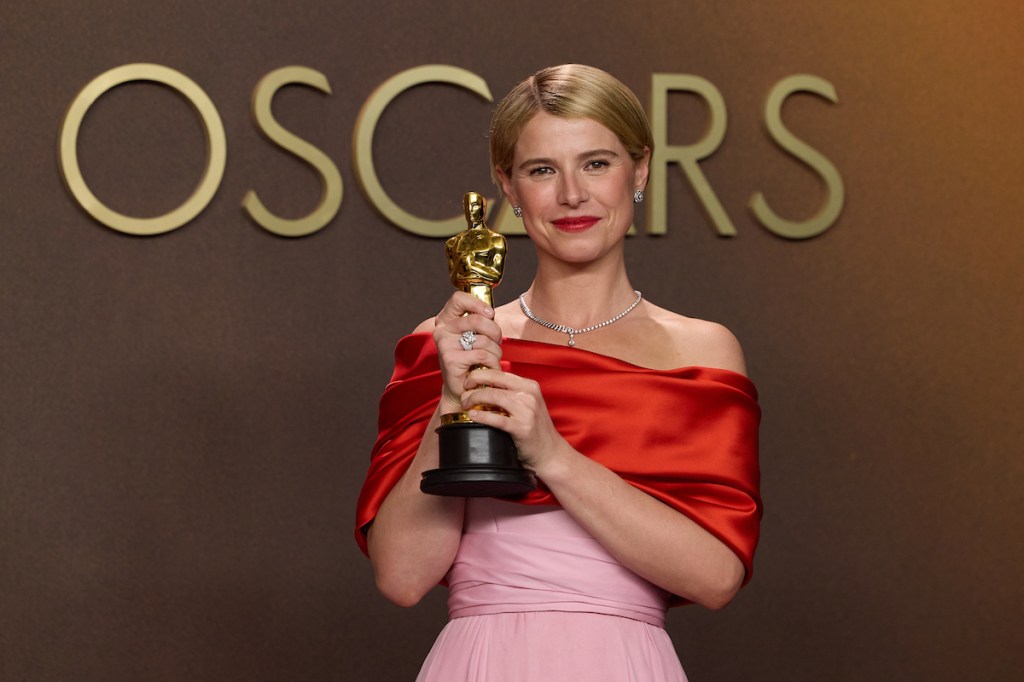
Image above: Jessie Buckley accepts the Oscar for Actress in a Leading Role during the 98th Academy Awards at the Dolby Theatre in Hollywood, 15 March 2026. Photo: AMPAS.
Her journey to Hollywood’s biggest stage has been anything but conventional. Buckley first came to public attention through television before steadily building a reputation across theatre, independent cinema and major studio projects. That trajectory reflects a wider generation of Irish actors who move fluidly between stage and screen, bringing theatrical discipline and emotional range into film performances.
What made the moment particularly striking was Buckley’s visible disbelief when her name was called. Despite entering the ceremony as the favourite after a dominant awards season, her acceptance speech carried a warmth and humility that felt refreshingly genuine in an industry often defined by polish and spectacle.
Ireland’s cultural influence on storytelling has long exceeded the scale of the country itself. Writers, actors and directors from the island have shaped theatre, literature and cinema for generations. Buckley’s Oscar sits within that tradition, another chapter in a long history of Irish voices carrying stories from small communities to global audiences.
Awards inevitably fade once the ceremony lights dim. What remains are the performances themselves. In Hamnet, Jessie Buckley delivers one that will likely endure long after this particular Oscars season is forgotten.
For Ireland, the moment felt less like a surprise than a recognition long overdue.
A Political Satire Finds Its Moment
Best Picture winner One Battle After Another arrived as one of the most ambitious projects of Anderson’s career. The film, a sprawling political thriller with satirical edges, explores a group of California radicals confronting a deeply paranoid and conspiratorial American government.
That premise could easily have tipped into heavy-handed commentary. Instead, Anderson approached the material with his characteristic mixture of humour, tension and philosophical detachment. The result is a film that critiques contemporary politics without pretending to offer tidy answers.
The Academy clearly admired both the scale and the craft. Alongside Best Picture and Best Director, the film secured several major prizes including Best Supporting Actor for Sean Penn and awards in writing, editing and casting categories.
If the Oscars often reward films that feel culturally “important,” this was the year that instinct aligned with a director working at the height of his powers.
Michael B. Jordan Finally Claims the Stage
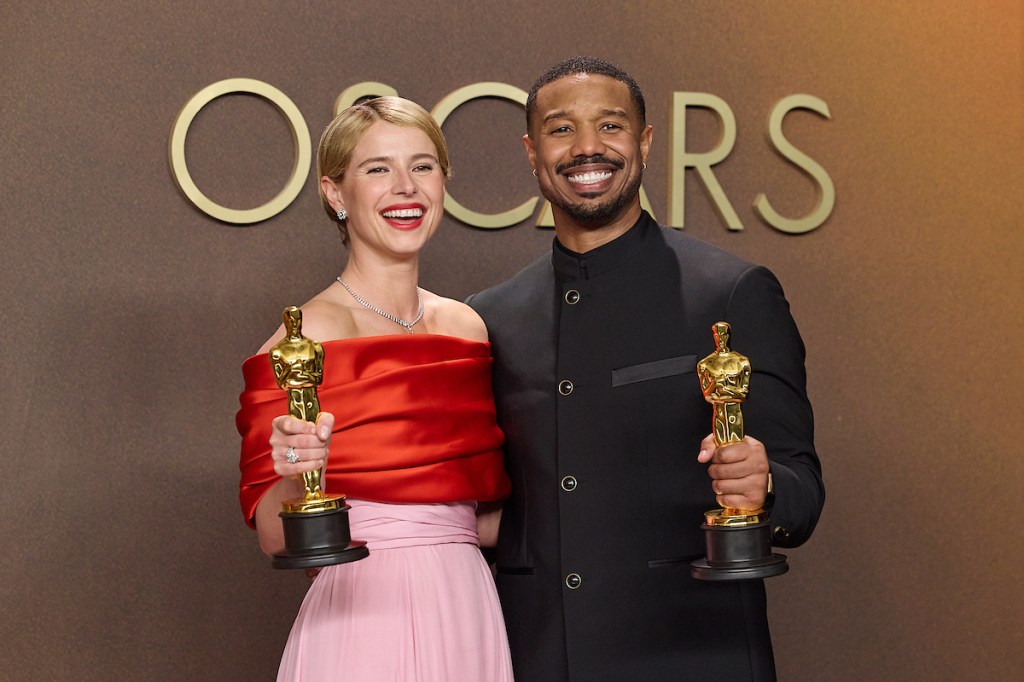
If Anderson’s film dominated the top categories, the emotional centre of the ceremony arguably belonged to Michael B. Jordan, whose performance in Sinners secured the Best Actor award. We reviewed Sinners earlier this year on The Industry Review, awarding it a rare 10 out of 10, making its success on the night particularly satisfying to see.

Jordan has spent the past decade quietly assembling one of the most impressive résumés in modern Hollywood. From Fruitvale Station to the Creed series and Black Panther, his collaborations with Ryan Coogler helped reshape the possibilities for blockbuster storytelling while building Jordan into a global leading man.
With Sinners, that partnership shifted gears into darker territory. The film blends horror, mythology and social commentary, turning the vampire genre into something far more grounded and contemporary.
The Academy’s recognition feels less like a surprise and more like a delayed acknowledgement of a career that has been steadily expanding for years.
Netflix, Blockbusters and the Craft Categories
Beyond the headline categories, the ceremony revealed the familiar tug-of-war between traditional studios, streaming platforms and large-scale blockbusters.
Netflix had a particularly strong showing through Frankenstein, which swept several technical categories including costume design, makeup and production design. Meanwhile the blockbuster end of the industry remained visible through awards for Avatar: Fire and Ash in visual effects and F1 in sound.
Even the music categories reflected the increasingly global nature of the industry, with the animated feature KPop Demon Hunters winning both Best Song and Best Animated Film.
The pattern is becoming clear. The Oscars increasingly reward prestige storytelling in the major categories while allowing spectacle-driven cinema to dominate the technical awards.
The Winners at a Glance
Best Picture
One Battle After Another
Best Director
Paul Thomas Anderson – One Battle After Another
Best Actor
Michael B. Jordan – Sinners
Best Actress
Jessie Buckley – Hamnet
Best Supporting Actor
Sean Penn – One Battle After Another
Best Supporting Actress
Amy Madigan – Weapons
Best Original Screenplay
Ryan Coogler – Sinners
Best Adapted Screenplay
Paul Thomas Anderson – One Battle After Another
Best International Film
Sentimental Value (Norway)
A Snapshot of Where Cinema Stands
Awards ceremonies often reveal more about the industry than about the films themselves. This year’s Oscars suggested a film culture still negotiating its future.
On one side sits the prestige cinema of auteur directors like Paul Thomas Anderson. On the other stands the ambitious genre filmmaking represented by Ryan Coogler and Michael B. Jordan.
Both forms are thriving. Both speak to different audiences. And for one night at least, the Academy found room to celebrate them together.
Hollywood rarely settles on a single story about itself. This year, it told two.
Photos: © A.M.P.A.S. / The Academy of Motion Picture Arts and Sciences

 The Industry Review
Leave a comment