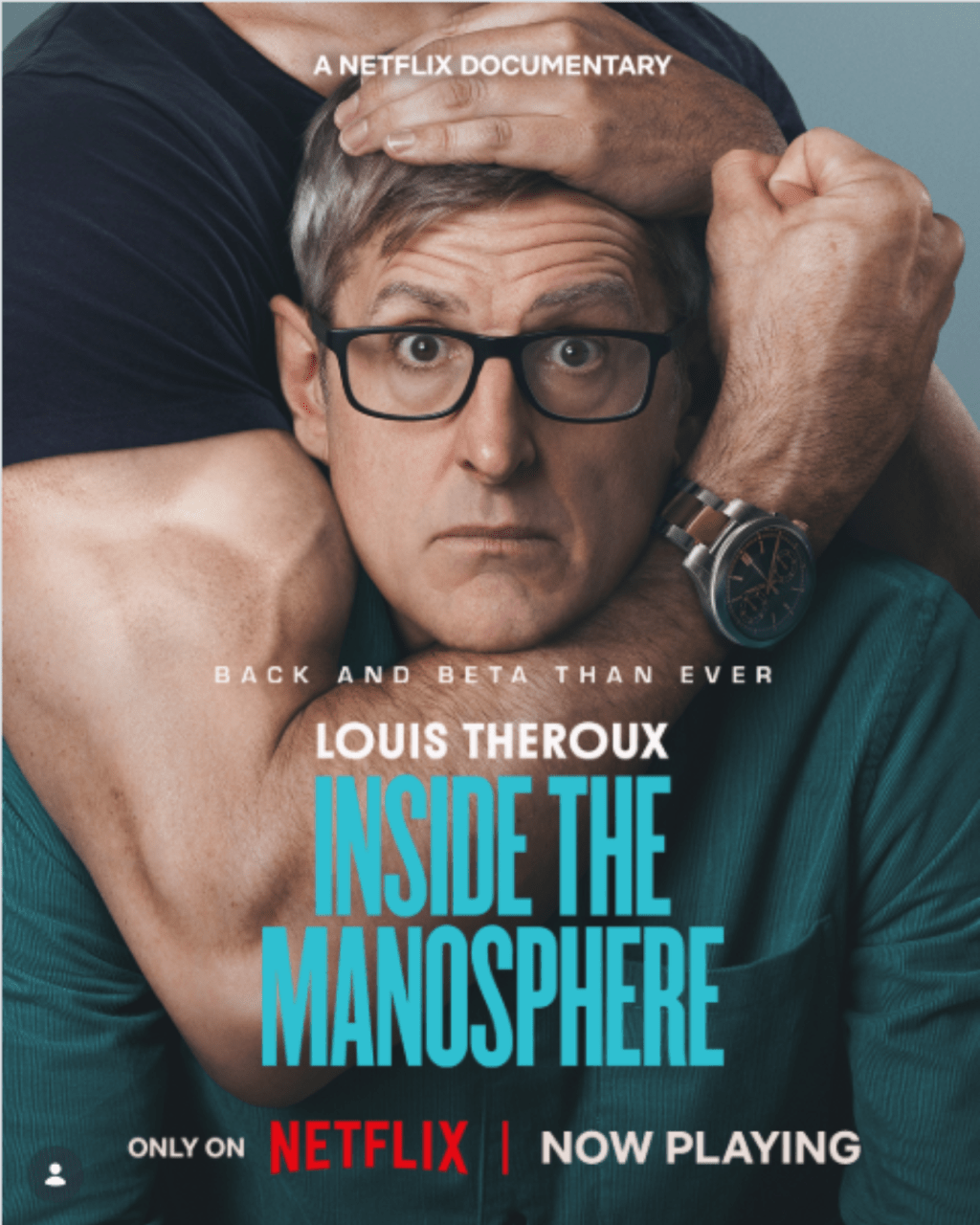
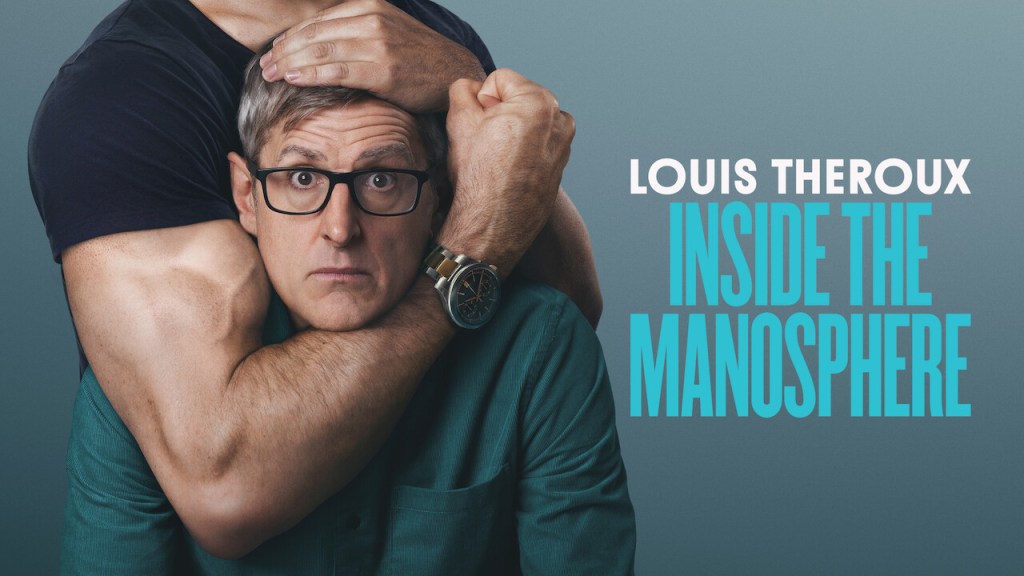
I recently watched Louis Theroux: Inside The Manosphere and honestly, it’s less a documentary and more an autopsy, not of masculinity, but of what happens when insecurity gets monetised and handed a microphone.
It lays bare the social rot that parts of the internet have become, not chaotic but corrosive, engineered even, a space where resentment is nurtured, validated and scaled, where men who abuse, harass and disrespect women can hide behind a screen, a username and a comment section and call it truth.
And let’s be clear, this is not about mothers and their sons. I have seen the online discourse blaming their mothers for not teaching them properly. Nonsense. Women are not the root cause of male failure, male violence, or male entitlement. That lazy deflection has carried far too much weight for far too long. What the documentary actually exposes is an absence, a lack of accountability, emotional literacy and intelligence, and a complete and utter lack of community, guidance, and consequence when it comes to their actions, and that void is being filled very deliberately by men who profit from keeping it exactly as it is.
These men are not anomalies. They are the inevitable outcomes of a system that has spent decades telling men they can do and be whatever they want, take anything and say anything, while women are still being told to be quiet, look pretty, shrink themselves and smile through it. Outcomes of platforms that reward outrage over substance, of algorithms that elevate the loudest, most inflammatory voices, of an attention economy that does not care what is said, only that it spreads, where truth and harm are irrelevant and engagement is everything.
And into that comes a conveyor belt of mediocrity dressed up as authority. Men who are, frankly, painfully ordinary. No expertise, depth, or original thinking. Zero charisma and no clear or obvious intelligence. Yet somehow positioned as leaders. Why? Because they have learned the formula. Say something degrading about women, frame it as honesty, repeat it until it sticks, and monetise the reaction.
It is not intelligence, nor is it insight. It is the most basic form of pattern recognition weaponised. Find what angers people, repeat it, and profit from it.
And let’s not pretend this exists in isolation. Look at politics, at the normalisation of men in power who openly disrespect women without consequence. Look at the continued failure to hold powerful men accountable across the board. The message is consistent. You can harm women, demean them, exploit them, and still retain status, wealth and influence. Of course it trickles down and starts to scale more and more.
This is not rebellion. It is performance. Lazy, repetitive, unoriginal performance. But it works because there is something underneath it. A real gap. Disconnected young men, struggling for identity, purpose, and belonging, genuinely believe women will only value them if they have clout, money, bulging biceps, a fat wallet, and dominance. And instead of being met with nuance or actual support, they are handed a script. Dominance equals worth. Control equals respect. Blame women for the discomfort you don’t understand.
It is a con. A very profitable one, and it is very clear, especially when placed alongside the rise of Andrew Tate, that women become the currency, the punchline, and the proof point, flattened into content that keeps the machine running.
So the question is not just what is wrong with these men, but what is wrong with a system that rewards them so generously for being exactly that? They did not build the stage, but they have learnt exactly how to perform on it, and what hits hardest is not the noise; it is the moments where the mask slips.
I can’t even comprehend the video above, or the comments underneath it, or how this kind of thing is not only allowed but amplified across the internet. It is a perfect, ugly example of how hate spreads in plain sight, how it normalises, and how these men really feel about women when they think they have an audience that will reward it.
Part of the reason it stays up is not because platforms agree with it but because the systems they are built on reward it. Content like this sits right on the line of what is technically “allowed”, so it often avoids removal while still being inflammatory enough to drive engagement. And engagement is the currency. The more people react, argue, share, or even watch out of disbelief, the more the algorithm pushes it. Outrage performs. Nuance doesn’t. Add in the sheer scale of content moderation and the reliance on automated systems, and a lot of this slips through or is simply not prioritised unless it crosses a very explicit line.
There is also a commercial layer to it. Controversial content keeps people on the platform longer, which means more ads, more data, and more profit. So while companies publicly condemn harmful behaviour, the underlying mechanics often still reward it indirectly. It creates a situation where hate does not need to be endorsed to be effectively incentivised. All you have to do is watch Myron Gaines and his so-called “best moments”, known on screen through the Fresh & Fit brand, to see the insanity of it all.
He talks about being a “dictator” at home, framing control as power and selling dominance as something to aspire to, and then the second his partner Angie enters the frame, the whole thing collapses. The tone shifts, the performance cracks, and what you are left with is not authority but someone scrambling to hold a narrative together that reality refuses to support. Watching him remove her from the situation because her presence exposes the fragility of it all says far more than anything he could ever claim out loud.
Then Harrison Sullivan, appearing under his TikTok identity HS TikkyTokky, openly admits he escalates into more extreme content just to farm clips: no belief system, no ideology, just numbers. Say something outrageous; watch it spread; repeat. Outrage becomes income, and that is the model.
And that is where the documentary lands its real blow: not on the men selling it, but on the ones buying it, because the followers are, sadly, the story. Young men who are isolated, angry, and drifting – you can see the fractures, economic, social, and emotional; they are looking for something solid, and what they are given is a fantasy built on control and blame. While some of them are barely holding their lives together, living in cars, and disconnected from any real community, it would be tragic if it were not being so actively exploited. It was genuinely cringe-worthy watching these young boys and men idolise such hollow, performative versions of masculinity.
And women sit exactly where the ideology places them, on the sidelines, managed, and told what to do, and as you can see in the documentary, often silenced outright, told to stop talking, to step back, and to disappear behind the scenes where apparently they belong, reduced to props that validate the performance, and the absence of a real female perspective is not a flaw in the film; it is the point being made in real time.
What Louis does is deceptively simple: no theatrics, no grand confrontation, just time, space and a camera, and when you give people enough rope, they do not collapse in one dramatic moment; they unravel slowly and pathetically.
This is not a culture war; it is a marketplace where male anxiety is packaged, sold and scaled for profit, with men positioning themselves as leaders while acting as salesmen of resentment, all of it reinforced by systems that reward outrage over substance, and what lingers is not the shouting or the performance but the moments where it slips, the flicker of panic, the shift in tone, the instant the script stops holding, because that is where the truth sits, and that truth is not fringe or niche; it is embedded, normalised and continuously reinforced by the very structures that allow it to thrive.

 The Industry Review
Leave a comment