Book Review
Ireland has produced political memoirs. It has produced literary fiction that dissects power. It has produced feminist scholarship rooted in academia. What it has rarely produced is a forensic cultural manifesto that drags an entire creative industry into the light and demands structural reform.
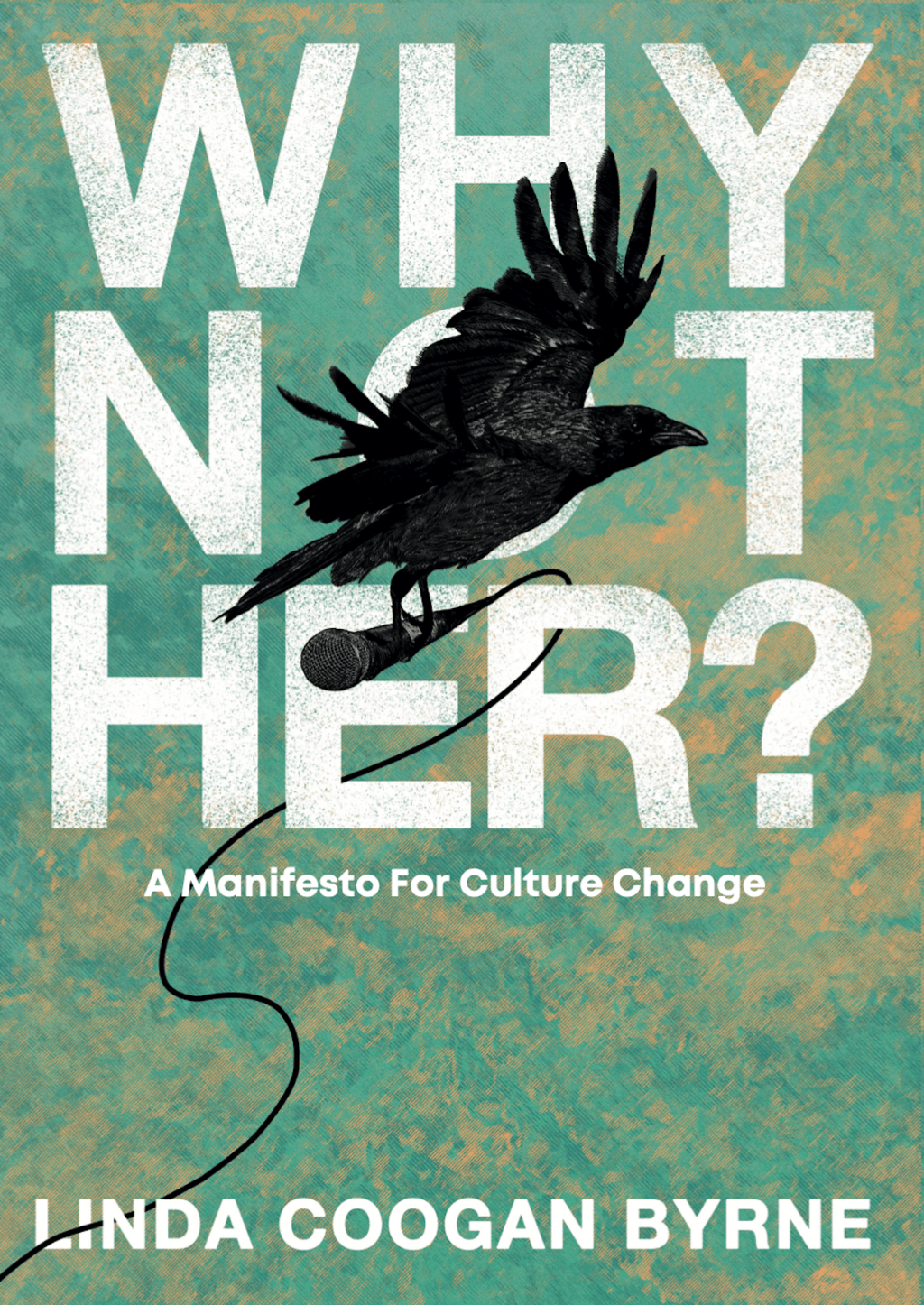
Why Not Her? A Manifesto for Culture Change is precisely that.
This is not a book about “supporting women in music.” Nor is it an inspirational memoir dressed in empowerment language. It is a structural autopsy of the Irish and UK music industries, grounded in data, lived experience, institutional memory and political consequence.
From the dedication, “For the girls,” the tone is intimate and deliberate. This is not written from safe academic distance. It is written from inside the system. From someone who built campaigns, navigated gatekeepers and then chose to expose the mechanics when the imbalance became impossible to ignore.
“The system isn’t broken – it was built this way,” Byrne writes.
That sentence reframes the conversation. It removes the industry’s favourite defence that inequality is accidental or transitional. It asserts design.
Across two decades of chart analysis, radio airplay breakdowns, festival billing audits and ownership concentration research, Coogan Byrne shifts the debate from anecdote to evidence. Women chart less frequently. They remain on charts for shorter periods. They receive less consistent airplay. They headline fewer major stages. These are not feelings. They are patterns.
And patterns, once documented, demand response.
What gives this book cultural weight, however, is not only the data. It is the cost of gathering it.

Coogan Byrne has faced significant professional backlash within the industry she once worked inside. There were attempts to undermine her credibility, pressure to soften her language and efforts to reframe structural critique as personal grievance. As previously reported in an interview with The Irish Sun, her first draft of the book was hacked and deleted alongside associated professional websites. The hostility was not confined to anonymous spaces online. Resistance emerged from gatekeepers invested in preserving existing power structures. At times it also came from female power brokers who had secured proximity to influence and were reluctant to challenge the system that had benefited them.
This nuance matters.
Why Not Her? refuses the simplicity of good women versus bad men. It interrogates systems. And systems reproduce themselves through anyone who benefits from them.
The book does not sensationalise harassment or hostility, but it makes clear that speaking truth within tightly gatekept industries carries consequence. The emotional current is steady rather than theatrical. The point is endurance.
Instead of retreating, Coogan Byrne gathered data. Instead of internalising backlash, she externalised it into reports. The Why Not Her? gender disparity data generated coverage across The Guardian, The Independent, BBC, RTÉ and Clash Magazine. What had long been dismissed as grievance became documented imbalance. Numbers shifted the conversation.
This is where the book moves beyond industry memoir and into cultural significance.
Ireland has a strong feminist tradition. From Mary Robinson’s leadership to the activism of the National Women’s Council of Ireland, from Women for Election to the 5050 Group, from Safe Ireland and Women’s Aid to the Irish Feminist Network, structural inequity has been challenged across politics, law and social policy. Coogan Byrne brings cultural infrastructure into that same accountability framework.
Music is not treated as entertainment detached from governance. It is framed as an economy. As visibility is linked to capital. As narrative control.
The chapter on data is where the book really digs in. Coogan Byrne makes it painfully clear that numbers are not abstract. They translate directly into who gets heard often enough to become familiar, who gets booked because they are familiar, and who then builds the kind of revenue and visibility that turns into longevity. It is less a theory and more a chain reaction.
When three major conglomerates dominate the overwhelming majority of exposure, success ceases to look organic. It looks structured.
The critique of market demand is equally pointed. Marketability is not pure audience preference. It is shaped by access, repetition, investment and algorithmic reinforcement. Who gets playlisted? Who receives promotional budgets and who secures stage placement?
This is not anti-male rhetoric. It is more so a very well paced structural analysis. The book also confronts how rigid gender expectations damage men through emotional suppression and social isolation. Dismantling patriarchal infrastructure is presented not as replacing dominance, but as ending it.
Stylistically, the prose is direct and unapologetic. It does not disguise anger or dilute discomfort. Some readers may find it confrontational. That reaction confirms its function. Manifestos are not written to reassure institutions.
What cements this text as one of the most significant Irish feminist cultural works of the decade is its refusal to remain theoretical. Reports led to meetings. Meetings opened policy dialogue. Cultural research entered governance space. The book demonstrates how persistence combined with evidence can influence institutional behaviour.
This is operational feminism.
At a time when feminism is frequently reduced to branding campaigns and curated line-ups, Why Not Her? pulls the conversation back to funding structures, ownership concentration, airplay systems and economic gatekeeping. Representation without reform is performance.
Ireland is currently navigating debates around quotas, broadcasting reform and arts funding that have tangible consequences. This book enters that moment as intervention rather than commentary. It asks institutions to examine commissioning patterns, funding ecosystems and visibility pipelines. Culture is not decorative. It shapes who is legitimised and who is paid.
The Ceol na mBan report sits uncomfortably within this trajectory. While it cited gender disparity groundwork that Coogan Byrne and the Why Not Her? team helped surface, the institutional framing softened edges. Recognition was present, but so too was dilution. For observers invested in the campaigning, it felt less like collaboration and more like containment.
And still, the work continues.
Backlash did not end it. Attempts to erode credibility did not silence it. Pressure to soften did not neutralise it. The endurance is embedded in these pages.
As International Women’s Month gathers pace, there will be panels, statements and public commitments. Some will be meaningful and some will be symbolic. The dividing line lies in whether structural questions are asked alongside celebratory rhetoric.
If you care about who gets funded, who gets platformed and who gets remembered, this is not a book to skim. It is one to wrestle with.
Because once the patterns are laid bare, the old explanations begin to thin.
And the central question becomes unavoidable.
Why not her?
Buy the book online via this link. Follow Why Not Her? on Instagram. Check out their reports here.
Editorial transparency: The Industry Review operates as a collective of writers and cultural professionals. Linda Coogan Byrne is a contributor to the publication. This review forms part of the platform’s ongoing coverage of cultural reform and industry accountability.


 The Industry Review
Leave a reply to Industry Interview: From Pledge to Power. A Conversation With Keychange on the Future of Equity in Music – The Industry Review Cancel reply