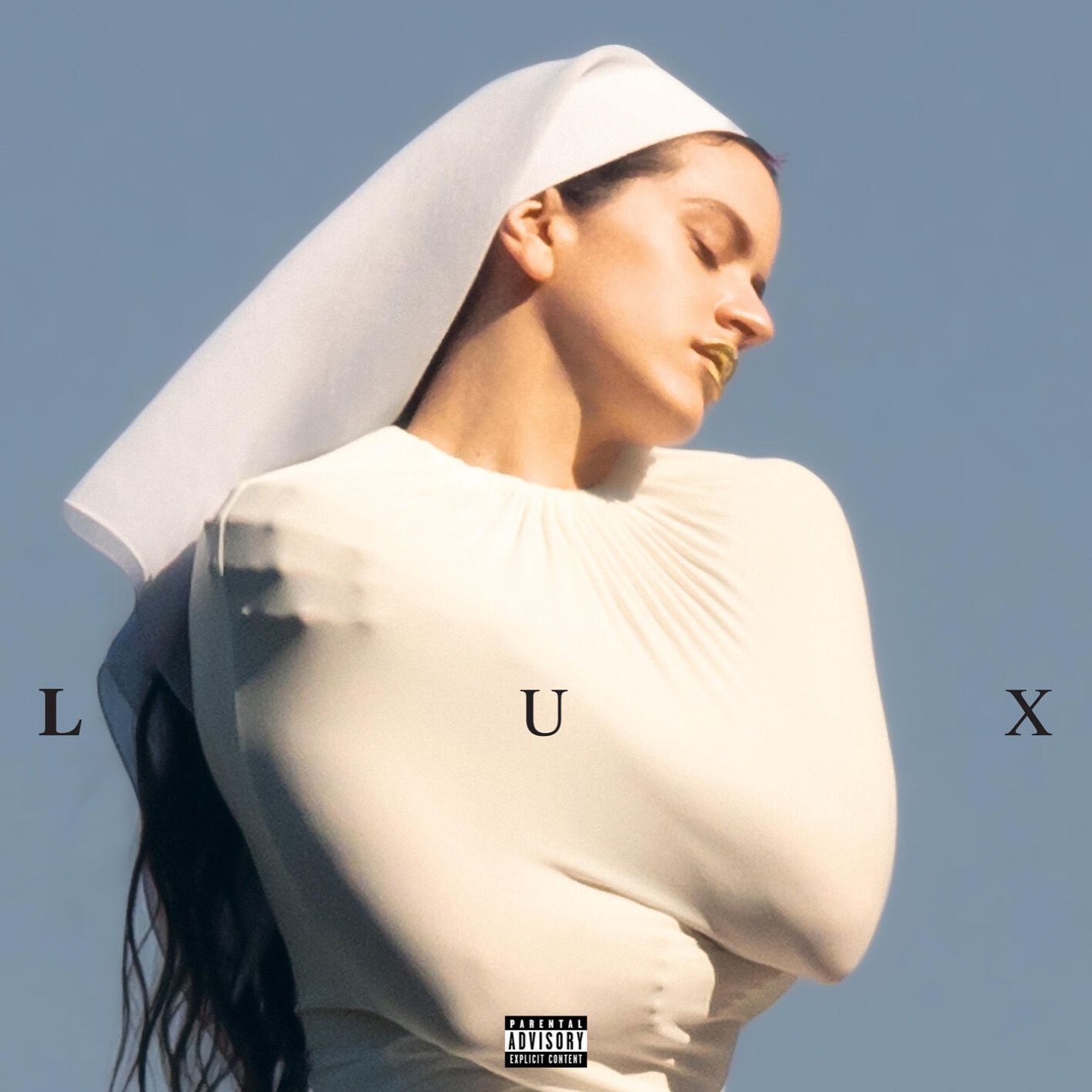
Our Rating 10/10 flawless.
Rosalía has spent years proving she can bend tradition and modernity into something uniquely hers. LUX is what happens when she stops proving and starts claiming.
This is not a pop album chasing scale. It’s an album built for it.
In interviews around the record, Rosalía said, “Llevo preparándome toda la vida para esto.”
“I’ve been preparing my whole life for this.”
That line is not marketing theatre. You hear the preparation in the discipline of the arrangements. She set a rule for herself while making LUX: she wanted the music to feel “más físico,” more physical, less loop-driven, less trapped inside digital grids. The result is an album that breathes. Strings swell with intention. Choirs feel embodied rather than layered. Percussion lands like ritual, not decoration.
The voice remains the axis. Controlled but volatile. She can carry a note with near-classical restraint and then splinter it at the edge, reminding you that emotional rupture is part of the design. This is not decorative virtuosity. It’s trained instinct.
What makes LUX even more compelling is the internal critique behind it. Speaking about the shift from her previous work, Rosalía recalled something her sister Pili told her after Motomami:
“Why do you always have to destroy the song?”
That question stayed with her. It was not an insult. It was a challenge. Her sister, who is also a key creative collaborator in her world-building, pushed her to let ideas fully form rather than interrupting them for shock or disruption. You can hear that evolution here. LUX allows songs to unfold completely. Themes are not fractured mid-thought. Arrangements are not undercut for irony. She commits.
Thematically, the album circles devotion, identity, fame and self-construction. Religion and spectacle blur. Intimacy and mythology co-exist. Some tracks feel almost liturgical. Others feel like confession whispered into a dark chapel. She understands that pop is performance, and instead of pretending otherwise, she builds the performance into the structure of the work.
Then came the BRIT Awards performance with Björk.
That was not a viral gimmick. It was alignment. Two artists who have consistently refused genre confinement sharing a stage without softening their edges for mass comfort. The staging leaned into drama rather than polish. It felt ritualistic. Intergenerational. Serious. In that moment, the ambition of LUX translated from record to arena without compromise.
Critically, the album has been treated as an event. Some debate individual choices. Very few debate the scale. The consensus is clear: this is not incremental growth. It is expansion.
LUX does not function as background listening. It demands presence. It rewards patience. It confirms that Rosalía is no longer operating within pop’s boundaries.
She is stretching them.
And if legend is defined by trajectory, risk and sustained reinvention, then the word fits.
See below for her Brit Awards performance. Just wow.

Leave a Reply