7/10
In an era where so much film and television feels algorithmically assembled, loud, cynical and terrified of sincerity, Remarkably Bright Creatures arrives like a deep breath.
Quietly devastating and unexpectedly beautiful, Olivia Newman’s adaptation of Shelby Van Pelt’s bestselling novel understands something many modern films have forgotten: audiences do not need constant spectacle to feel something profound. Sometimes all you need is grief, loneliness, a coastal aquarium and an unusually perceptive octopus.
And at the centre of it all is Sally Field delivering one of the finest performances of her late career.
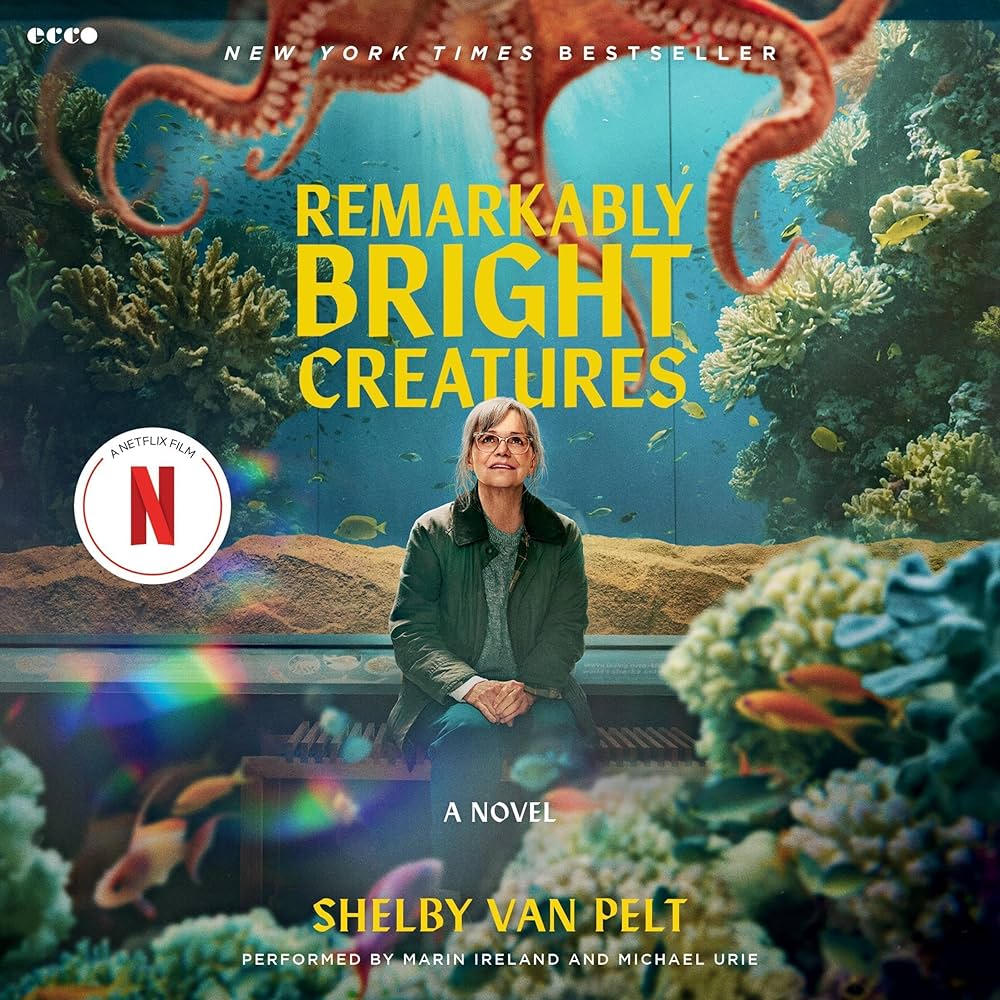
Field plays Tova Sullivan, an ageing widow working night shifts cleaning an aquarium while carrying decades of unresolved grief following the loss of her son. Lesser films would reduce her to either a quirky old woman dispensing life lessons or a sentimental caricature of ageing femininity. Instead, Tova feels startlingly real. Sharp. Lonely. Resistant. Exhausted by life but still quietly enduring.
What makes the performance extraordinary is its restraint. Field rarely reaches for melodrama. The grief sits in her posture, her silences, and the routines she clings to in order to survive another day. Critics across outlets repeatedly highlighted how much emotional weight she brings to the role, with several reviews describing the film as “warm”, “heartfelt” and emotionally resonant largely because of her presence.
Then there’s Marcellus.
On paper, a philosophising octopus voiced by Alfred Molina sounds like something that should collapse into absurdity within minutes. Instead, Marcellus becomes the emotional and philosophical core of the film. Acerbic, observant and strangely compassionate, he functions almost like an external conscience watching humans stumble through grief and disconnection from inside a glass tank.
The film’s genius lies in how seriously it treats that relationship. It never winks at the audience. Never apologises for its own tenderness. And because of that confidence, the emotional connection between Tova and Marcellus genuinely works.
Visually, the film is drenched in melancholy. Blue aquarium light, reflections against glass, dark coastal mornings and quiet interiors create a dreamlike atmosphere where every character seems emotionally submerged. Even reviewers who found the narrative slightly predictable praised the film’s emotional warmth and comforting tone.
Lewis Pullman also deserves enormous credit as Cameron, a drifting young man searching for family and meaning. The relationship between Cameron and Tova unfolds gently rather than through forced sentimental shortcuts. The screenplay allows emotional trust to build slowly through shared loneliness and recognition. That patience gives the eventual revelations real emotional impact.
The film is not flawless. Some supporting characters feel underdeveloped. A few side plots drift toward familiar “small-town healing drama” territory. Certain critics argued the adaptation occasionally slips into cliché or over-sentimentality.
But honestly, those flaws feel minor compared to what the film achieves emotionally.
What lingers after the credits is not the mystery or even the plot itself. It is the aching humanity of it all. The film’s understanding that grief does not disappear neatly. That aging can feel invisible. That companionship sometimes arrives from the strangest possible places.
Most importantly, Remarkably Bright Creatures reminds us there is still enormous power in sincerity. Not irony. Not spectacle. Not franchise exhaustion masquerading as storytelling.
Just people trying to find their way back to one another before it is too late.
And somehow, against all odds, one elderly octopus becomes one of the most emotionally intelligent characters on screen this year.

 The Industry Review
Leave a comment