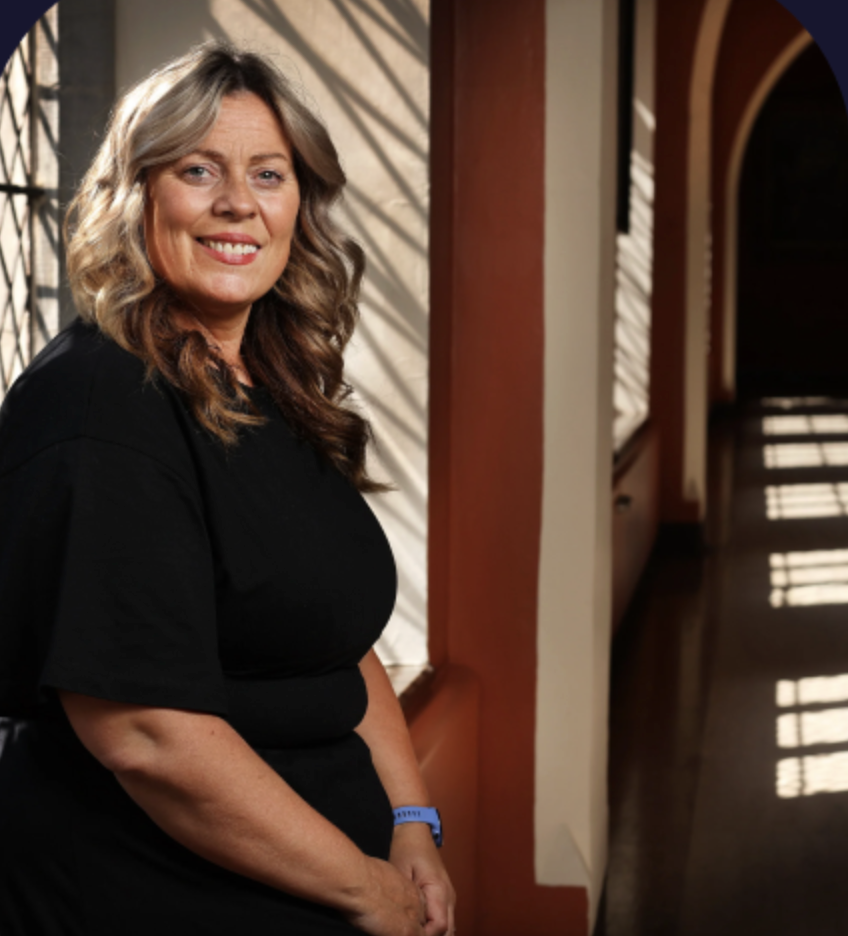
There are people who write about inequality from a distance, and then there are people like Dr Katriona O’Sullivan who have lived inside it, survived it, and refused to sanitise what it actually does to a human being.
Over the past number of years, O’Sullivan has become one of Ireland’s most important public voices on class, poverty, education and digital exclusion, not because she offers neat political slogans or polished motivational clichés, but because she dismantles them entirely.
Her bestselling memoir Poor arrived like a cultural rupture. It forced Ireland to confront uncomfortable truths about class systems many still prefer to deny exist at all. In doing so, it resonated far beyond literary circles, connecting deeply with women, working-class communities, educators and people who saw their own lives reflected back with startling honesty for the very first time.
Now a professor, researcher and internationally recognised advocate for digital inclusion, O’Sullivan speaks with the kind of clarity that only comes from lived experience sharpened by scholarship.
There is no performance in her language. No romanticisation of “resilience”. No appetite for being turned into an inspirational mascot for structural failure. Instead, she speaks plainly about trauma, poverty, education, welfare systems, inequality, technology and the dangerous myths societies tell themselves about meritocracy.
In this conversation with The Industry Review, she reflects on class denial in Ireland, why survival stories are too often weaponised politically, the risks emerging around AI and digital inequality, and why she believes older systems of power remain deeply embedded beneath the country’s progressive self-image.
What emerges is not simply an interview about poverty or opportunity, but a wider conversation about power itself, who gets heard, who gets left behind, and why storytelling still matters politically, culturally and emotionally…

Your story has resonated deeply with people across Ireland and internationally because it dismantles many assumptions around poverty, education and intelligence. Looking back now, what do you think people still fundamentally misunderstand about class and opportunity?
They think that opportunity is equal, and that hard work is the key to success. We are taught this from an early age: work hard and you can be anything, which is a lie. I could not work my way out of an empty stomach or a traumatised brain.
People also think that poor people don’t ‘want’ better lives. It is not that we don’t want them, it is just that we don’t trust the different life being offered. I needed to be supported to believe in myself, and in the new world being offered to me.
No one would live in poverty if they could live like I do now. It is illogical to think that people choose not to work.
You’ve spoken very openly about surviving systems that were never designed for people from disadvantaged backgrounds. How much of success, in your opinion, comes down to resilience versus structural access?
It is not resilience. Let’s stop using the word resilience as if success is tied to being resilient. I just about survived. What that means is I just didn’t die. I am not resilient. In fact, I am fragile and find challenges hard. That is because of my history. I need more support to get through, not less.
My success comes from asking for help, and being given help: free therapy, free childcare, college supports. I would say the only thing that I did was never stop trying, but everyone tries. It is not unique to me. Some of us are just met with more help.
There is often a romanticisation of “overcoming adversity”, especially when it comes to women from working-class backgrounds. Do you ever feel society celebrates survival stories while still refusing to properly address the systems creating the inequality in the first place?
YES! That is why I clearly say in my book that I do not want to be held up as an example of what can be done by women like me. I know plenty of women who could not do this because things are too hard and the system is not in place to help us.
In my garden I had pyrite, which meant the flowers wouldn’t grow. No matter how hard we tried to get them to grow, the ground was full of rocks so they couldn’t plant their roots. Occasionally a hardy flower would make it through, finding her way through the mess of the ground. I never once looked at the failing flowers and said, ‘Come on now, find your way through like the hardy flower.’ No, I dug up the ground and removed the rocks so all the flowers could grow.
We should not be using the hardy flower as a tool to beat all the other flowers that don’t grow. We should be creating equal conditions.

Technology and AI are increasingly shaping education, media and employment. Do you believe these tools will genuinely democratise opportunity, or are we at risk of reproducing the same inequalities through new digital systems?
If we do not educate people on how to understand these tools, then the risk is they will be used for harmful purposes, and that is already happening. There are people right now being manipulated into believing lies about migration and all sorts of things because they have not been given enough education and opportunity to think critically about information.
We also know that women use AI a lot less than men in the workplace, which is another risk as its use grows. The regulation of misinformation in the media needs to be stronger too. Everyone needs to pull together so we can enjoy the benefits of these developments.
You’ve become an important public voice around digital inclusion and access. What worries you most right now about the future of young people growing up in an increasingly algorithmic and online world?
I worry about the lack of opportunity to understand basic concepts like AI, data science and how algorithms work. There is a class divide, gender divide and age divide in who is being taught to understand how these tools can be used for good and bad. I worry that there are bad actors using these tools to galvanise groups of people who feel lost and underserved.
Ireland often likes to see itself as progressive and egalitarian, yet class remains deeply embedded in everything from education to media visibility. Do you think Ireland is honest enough with itself about class inequality?
NO! We deny class here. We say, ‘Oh, that is an English thing.’ When I am met with that, I say, okay, go buy a house here or here, in traditionally underserved areas, and people recoil. It is only privileged people who deny class, by the way. They think everyone gets equal opportunities to thrive. They think school is equal and the welfare system is there to help.
The school system is unequal, and the welfare system is a trap which is so hard to escape, especially now. We have class here, and we need to be more honest about the people left to rot in a bad class system.

Women who speak publicly about inequality, power or structural injustice are often met with disproportionate scrutiny online. Have you found visibility empowering, exhausting, or a complicated mix of both?
No, I have found it empowering and I am pretty confident that I know what I am talking about. I am a professor. I have researched this. I have spoken at the UN, Westminster and the EU on this topic. I know my shit.
People who are more privileged should be saying more, though. Why is it my job to fight this fight?
Your work consistently brings humanity into conversations around policy and technology. Why do you think lived experience is still so undervalued within academic, political and institutional spaces?
It isn’t undervalued, it is just not listened to. It is used tokenistically. We have an event, we invite a person with lived experience to share, then we clap, and then we continue to do very little to solve the problem they talked about. This can be seen across all of society.
I presented at the Social Inclusion Forum twice and the last time I said, ‘Don’t ask me back unless you are going to listen to me.’ I am not into talking into an echo chamber.
What role do storytelling and visibility play in changing public understanding around poverty, education and social mobility?
Stories make things more relatable. We need to see a person, feel their life and experience, to want to help. That has existed since as far back as time began.
I am constantly telling my story to keep visible the importance of class and education, and the impact of trauma. I will keep telling stories until we do better for women like me.
Is there a particular moment in your journey where you realised your voice had become bigger than your own personal story and had started to represent something wider culturally?
Yeah, loads of times. I get messages all the time from women who feel seen. Every one of them makes me feel like I am doing something meaningful for those who feel lost or unseen. Going to the UN was pretty cool. Meeting Mary Robinson was cool too. Proper pinch-me moments.
I don’t really think about it too much because I don’t want my life to become focused on me and what I am achieving. Best to try to stay humble and just keep going forward. I would love to see my book on the Leaving Cert though. I think that would be significant.
We’re currently living through a period of enormous instability globally, economically, politically and socially. Are you hopeful about the next generation, or concerned for them?
Concerned, but always hopeful. My sons are so knowledgeable about the world and politics, more than I was and sometimes more than I am. That is because they have information in their hands. If we can make sure they have critical thinking and heart alongside the information, then we might be onto a winner.
It is the older men who are the issue. Look around. It isn’t the young who are making things go bad, it is old white men. Let’s start talking about them, not the young.
Finally, what does success mean to you now, beyond titles, achievements or recognition?
It means waking up every morning to Dave and the lads, him making me a coffee and saying he loves me. It is having time to go to the theatre, to read, to think. It is freedom from the hurt and the fear. I am successful right now because I have all of this.
You can follow and find out more about Katriona here.
Images use from Katriona O’Sullivan and her Instagram.
Leave a Reply