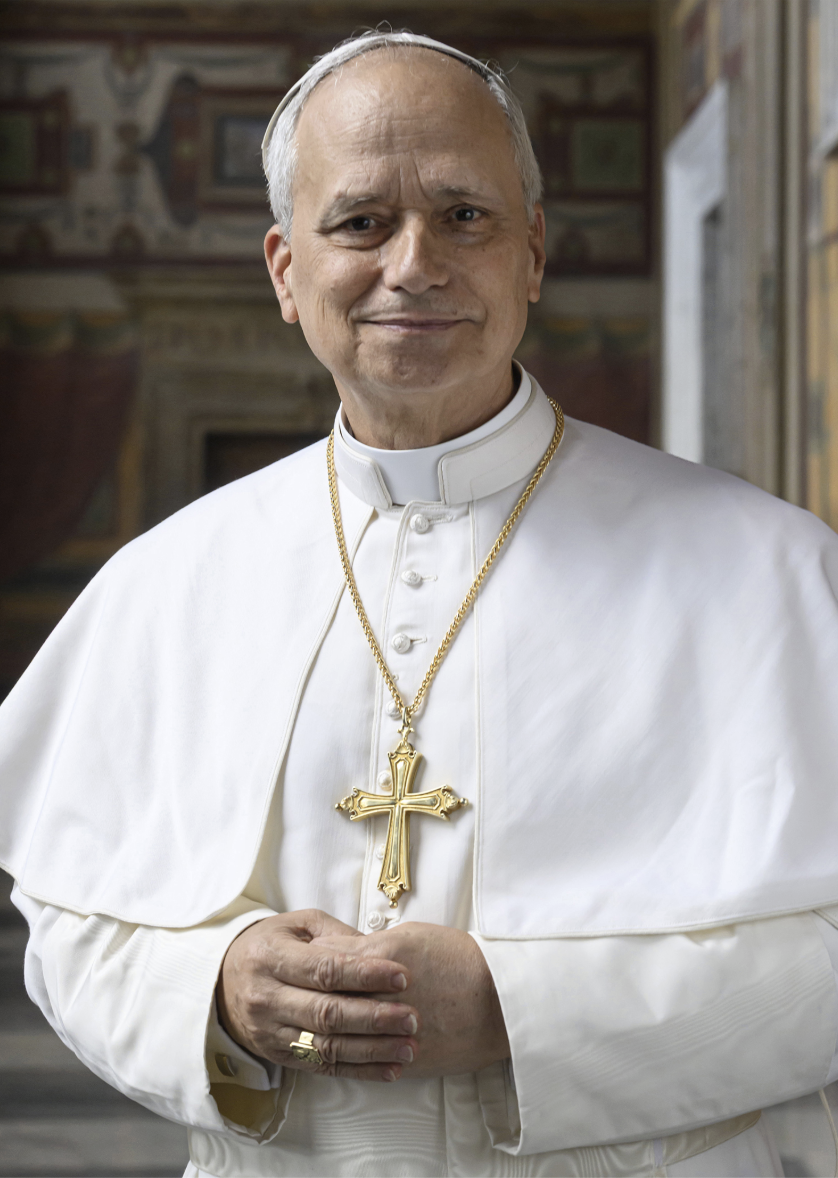
The Vatican officially entered the AI debate as Pope Leo compares AI threat to Biblical ‘Tower of Babel’. By now, most people have become accustomed to hearing artificial intelligence discussed through the language of markets, productivity, disruption and innovation. Billionaires speak of acceleration, governments don’t know what to do, and the titan tech company CEO’s speak of it all as a great inevitability.
The Vatican, however, has now entered the conversation from an entirely different direction.
In his first major social encyclical, Magnifica Humanitas (“Magnificent Humanity”), Pope Leo XIV has delivered a sweeping intervention on artificial intelligence, human dignity, labour, truth, morality and power.
Brief Summary of Magnifica Humanitas
Magnifica Humanitas acknowledges familiar concerns about AI, including job insecurity, manipulation of information, privacy violations, ideological bias, autonomous weapons, and a futuristic vision of an “enhanced human being.” But Pope Leo XIV identifies a deeper danger: that human beings may begin to see themselves and others as projects “to be optimised” (Magnifica Humanitas 112).
Against this, the encyclical teaches that human limits such as illness, aging, suffering, and vulnerability are not simply defects to be corrected; rather, human beings often flourish through their limitations, where they can discover wisdom, experience the closeness of others, and encounter the Lord (MH 118–119). Therefore, AI should serve humanity not by tempting us to escape limitation through optimisation, but by supporting a life of “openness and communion” (MH 231). — Ascension Press
Far from offering a nostalgic rejection of technology, the document reads instead as a warning about what happens when technological systems begin reshaping human life faster than democratic, ethical and cultural institutions can respond.
I personally think it is too late in the day to panic. But at the same time, I suppose it is better late than never.
And in places, it is remarkably direct.
“When such power is concentrated in the hands of a few, it tends to become opaque and evade public oversight.”
It is a line that slices straight through the centre of modern cultural life.
The Vatican is not just softly debating software here. It is debating our civilisation and our future as human beings. I have to admit, there were moments while reading it where I found myself thinking, “How is this our reality?” and “How did we arrive here as a human race?” But here we are.
The Church Versus The Machine
Historically, papal encyclicals are not casual essays. They are among the highest forms of Catholic social teaching and often arrive at moments of immense social upheaval. Which is about the right timing, as the world and mother nature continues to be abused by greedy wealthy elites.
Observers have already begun comparing Magnifica Humanitas to Rerum Novarum, Pope Leo XIII’s landmark 1891 encyclical on labour rights and industrial capitalism during the Industrial Revolution.
The parallel is obvious and bound to be made.
Then, mechanisation transformed labour and concentrated wealth in the hands of industrial elites. Now, AI threatens to automate not only physical work, but increasingly creativity, communication, administration, education and even emotional interaction itself.
Throughout the document, Leo XIV repeatedly returns to one central concern: that humanity is beginning to confuse efficiency with wisdom.
It is difficult not to read that warning against the backdrop of modern platform culture, where algorithms increasingly dictate visibility, value and attention across journalism, music, politics and art.

A Direct Challenge To Silicon Valley Ideology
What makes the encyclical genuinely fascinating is that it does not frame AI as a technical issue but as a moral and political struggle over who gets to shape the future of humanity itself.
Leo XIV criticises the growing concentration of technological power inside private corporations and warns against societies becoming dependent upon systems whose operations remain inaccessible to democratic accountability.
Again and again, the document raises concerns surrounding:
- algorithmic manipulation
- misinformation and synthetic media
- autonomous weapons systems
- labour displacement
- surveillance capitalism
- digital inequality
- the psychological shaping of children through machine systems
- the erosion of human agency
At one point, the encyclical states:
“No machine, however sophisticated, possesses conscience, suffering, mercy, or moral responsibility.”
It is an extraordinarily direct rejection of the growing cultural tendency to frame AI as something approaching human consciousness. In many ways, this is the leader of the Catholic Church drawing a hard moral boundary against parts of modern tech culture increasingly fascinated with transhumanism, artificial consciousness and the idea that human cognition itself may eventually become obsolete.
The Vatican’s position is crystal clear: intelligence is not the same thing as humanity.
The Cultural Implications Are Enormous
For those working within media, music, journalism and the arts, much of this already feels painfully familiar.
Artists are increasingly forced to adapt themselves to algorithmic systems that reward speed over depth, repetition over originality and engagement over meaning.
Journalists compete against AI-generated content farms. Cultural visibility is often determined less by merit than by platform mechanics controlled by a small number of multinational corporations.
The encyclical repeatedly warns against technological systems that commodify human attention while weakening authentic communal life.
That observation lands with particular force in an era where outrage travels faster than truth and where recommendation systems increasingly shape political understanding, identity formation and social cohesion itself.
In many ways, Leo XIV appears less concerned with machines becoming human than with humans becoming machine-like.
Labour, Dignity And The New Industrial Revolution
One of the strongest sections of the document focuses on labour and economic inequality.
“The economy exists for the human person, not the human person for the economy.”
Again, the historical echoes are impossible to ignore.
As AI systems continue advancing across white-collar industries, fears surrounding mass displacement are no longer confined to factory work.
Writers, designers, educators, administrators, translators, musicians and publicists are all now confronting an uncertain future where automation increasingly intersects with precarious labour markets.
The Vatican does not oppose technological development outright. Instead, it argues that innovation detached from ethics becomes dangerous.
Because beneath all the rhetoric about productivity lies a far more uncomfortable question:
Who benefits from this transformation, and who becomes expendable?
An Ancient Institution Facing A Hypermodern Crisis
There is an undeniable irony running through all of this.
For centuries, the Catholic Church was criticised for resisting scientific progress and modernity. Yet now one of the world’s oldest institutions is among the loudest voices warning that unchecked technological acceleration may destabilise democracy, labour, culture and even our collective understanding of truth itself.
Critics will rightly point to the Church’s own institutional failings and contradictions. That scrutiny remains essential. But it would be intellectually lazy to dismiss the encyclical simply because it comes from the Vatican.
Because beneath the theology sits a serious and increasingly urgent argument:
that societies cannot allow a handful of corporations, engineers and investors to unilaterally redesign human existence without democratic accountability, ethical restraint or cultural reflection.
In the age of AI, that may become one of the defining political questions of the century.
Words by Linda Coogan Byrne.
If this piece resonated with you and you’d like to support Linda’s writing, research, and independent cultural analysis, you can support here by leaving a TIP.

Leave a Reply