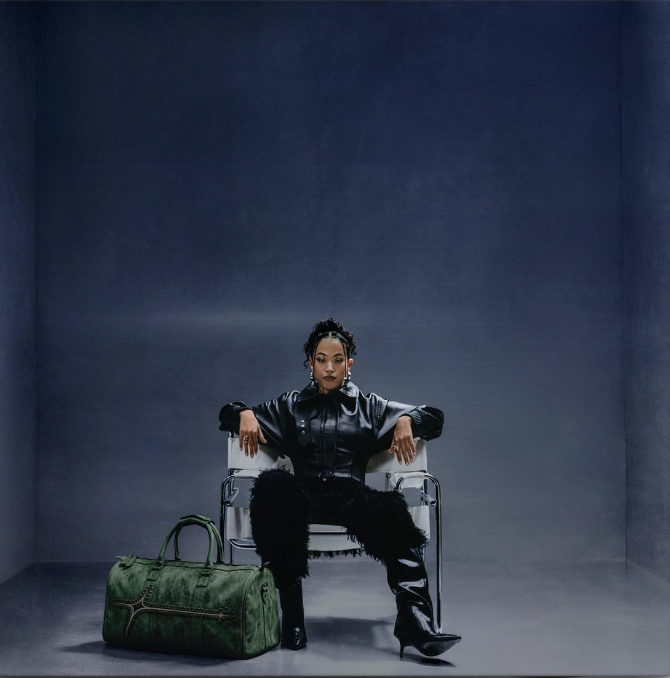
Rating: 4/5
Ireland has produced exceptional electronic musicians for decades, but the international commercial breakthrough of Dublin artist Jazzy deserves attention for several reasons.
Her debut album, Peace & Patience, released on 23 October through Chaos Records, represents the transition from successful singles and high-profile collaborations to a more complete artistic identity. It arrives with substantial commercial momentum and the expectations that accompany an internationally recognised name.
Peace & Patience arrives with the confidence of an artist who knows exactly where she’s going. Across 13 tracks, the Dublin singer and DJ moves between euphoric house, club-ready basslines and moments of genuine reflection. “My People” celebrates her roots, while “Invisible”, featuring Chris Lorenzo, delivers the kind of dancefloor energy that made her a household name.
The title track reveals greater ambition, balancing gratitude with the pressures of success. There are moments when the production feels familiar, but Jazzy’s personality carries the record. Ireland has produced a formidable international dance star, and she’s only getting started.
Jazzy’s rise has been remarkable. Her work has reached mainstream audiences across Europe, building on the renewed popularity of house music, vocal dance records and electronic productions that connect club culture with radio.
The commercial success is important, but so is the position she occupies within that market.
Electronic music has a complicated history when it comes to the recognition of women. Female voices have provided some of dance music’s most enduring moments, yet the singers responsible have not always received billing, ownership or cultural recognition equal to the producers and DJs associated with the recordings.
That imbalance is not exclusive to Ireland or to electronic music. It reflects a wider problem in an industry where production and technical expertise have frequently been coded as masculine, while women’s contributions have been treated as supporting elements.
Jazzy’s emergence as a recognisable artist in her own right presents a welcome alternative.
The title Peace & Patience suggests a record concerned with the experience of building confidence over time. There is an appealing contradiction in that idea. Dance music is commonly associated with immediacy, physical release and the search for an unforgettable moment. An album, by comparison, asks for continuity and sustained engagement.
Bringing those two traditions together is not straightforward.
A great dance single must communicate quickly. Its introduction, rhythm and vocal hook need to work in environments where listeners may be hearing the music for the first time, surrounded by hundreds of other people. An album has different requirements. It must establish an identity beyond the instant recognition of one successful track.
That is why this release represents an important commercial and creative test.
There is also a question about geography. Irish music has historically been presented internationally through a familiar collection of genres: traditional music, folk, guitar-based rock and, more recently, alternative pop and hip-hop. The success of artists such as Jazzy demonstrates that contemporary Irish musical identity is much broader.
Dublin’s connection to club culture is not a recent invention. The city has supported dance scenes, independent promoters and electronic producers for decades, often with considerably less national recognition than guitar-based musicians received.
Jazzy’s mainstream breakthrough creates an opportunity to acknowledge that history while introducing a new generation of listeners to Irish electronic music.
The debut album is therefore more than the next stage of a successful campaign. It tests whether an artist already associated with enormous streaming reach can establish the depth and continuity needed for a sustained recording career.
Her international progress also deserves recognition within Irish music journalism. Too often, achievements outside the country’s most familiar genres are treated as peripheral, even when their commercial reach is substantial.
Peace & Patience is an opportunity to correct that imbalance and examine Irish dance music as an important component of the country’s cultural exports.
Leave a Reply