Rating 4/5
Few Irish bands have experienced the extraordinary success, cultural influence and sustained public criticism that have accompanied U2 throughout their career.
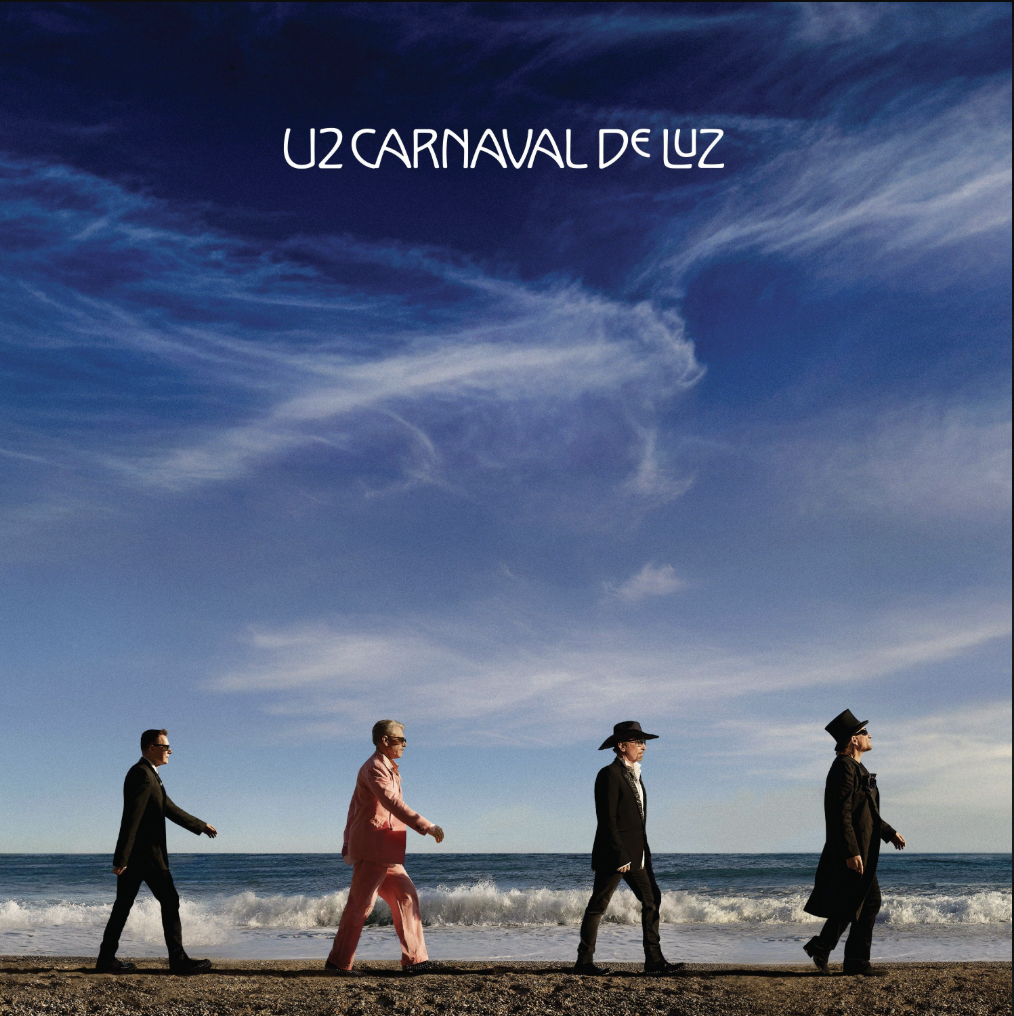
Their new album, Carnaval de Luz, released on 13 November, arrives almost a decade after their previous studio album of original material. It is a significant return for a group whose international reputation is secure but whose contemporary artistic relevance remains a recurring subject of debate.
That debate has followed U2 for decades.
At their commercial peak, the band transformed the possibilities available to Irish musicians, building a global audience and establishing a scale of international touring that few performers from the country had previously achieved.
Their success was not simply a matter of large concerts and record sales. U2 helped alter perceptions of Irish popular music, demonstrating that a band emerging from Dublin could become a defining presence in international rock culture.
The importance of that achievement remains considerable.
Yet longevity creates problems of its own. Musicians who spend decades at the highest commercial level eventually become associated as much with their public image as with their recordings.
For Bono, that process has been especially pronounced. His political advocacy, celebrity relationships and willingness to speak on international affairs have sometimes overshadowed discussion of his work as a songwriter.
Carnaval de Luz arrives with a brighter musical identity, drawing on ideas of celebration, spiritual renewal and the cultural exchanges suggested by its Spanish and Portuguese title.
The record also reflects the band’s continuing interest in musical traditions beyond the familiar boundaries of Anglo-American rock.
That interest deserves examination, although international musical influence should never be confused with artistic innovation in itself. The strongest cross-cultural collaborations depend on meaningful creative engagement, not simply the incorporation of fashionable sounds.
U2 have navigated that territory before, with results ranging from genuinely adventurous to commercially calculated.
The group’s relationship with contemporary pop remains complicated. Their most celebrated recordings emerged during periods when the band challenged its own established methods, most famously with Achtung Baby and the electronic experiments that followed.
Later attempts to retain a mainstream audience have attracted more divided critical responses.
That history makes Carnaval de Luz an important test of whether the band can approach familiar ambitions with renewed energy.
The new album also follows a difficult period for drummer Larry Mullen Jr, whose physical health affected his ability to perform with the group. His absence from the band’s Las Vegas Sphere residency raised questions about the future of the original four-piece line-up. Los Angeles Times
For a group that has maintained its founding membership across five decades, that continuity has become an essential component of its identity.
The album’s closing track, Torn, also carries considerable emotional significance through the involvement of Dolly Parton, whose contribution was among her final recordings. The collaboration connects two artists associated with very different musical traditions but united by long careers and an instinct for direct emotional communication. rte.ie
Critical responses to Carnaval de Luz have been mixed but frequently appreciative. Some reviewers have welcomed its energy and willingness to embrace the band’s familiar strengths, while others have questioned whether the music consistently escapes the conventions of late-career stadium rock.
That division is unsurprising. U2 are operating in an unusual position.
They no longer need another successful album to establish their importance. Their earlier achievements have already secured a place in the history of popular music.
What remains interesting is the decision to continue creating when the weight of that history makes every new recording an invitation to comparison.
The continuing influence of U2 also presents an opportunity to consider the broader development of Ireland’s music industry.
The country’s international musical presence is now considerably more varied than it was when the band first emerged. Contemporary Irish artists are reaching global audiences through folk, experimental music, electronic production, hip-hop and alternative pop.
That diversity does not diminish U2’s achievements. It demonstrates how much the landscape has changed.
Carnaval de Luz should be approached as the work of an established band attempting to find renewed meaning in a career that has already exceeded conventional expectations.
The commercial significance of its release is clear. Whether it establishes another enduring artistic chapter will depend on how its songs survive beyond the publicity surrounding the band’s return.
Leave a Reply